DFI51 ANNUAL CONFERENCE 2026 | Orlando, Florida | November 2-5, 2026 | Booth 627

What We Do / Support of Excavation / Custom Modular Walers & Struts

Moving people and equipment safely

Traffic &
Equipment Decking

Modular steel decking that keeps traffic, pedestrians and construction equipment moving above an active excavation, installed in a fraction of the time of site-built decks.

~50–60%

reduction in installation duration

~12 m · ~10 t

typical deck panel length and weight

>90%

steel recycling rate worldwide

1 supplier

no extra decking or asphalt contractors

Industry Challenges

Cut and cover without shutting down the street

Cut and cover tunneling is usually the most economical construction method, but it can be highly disruptive, especially in urban areas where excavations are beneath streets or close to utilities and businesses. A temporary traffic deck lessens that disruption.

What is a traffic deck?

A traffic deck ensures safe passage over an active excavation, enabling uninterrupted construction in the excavation while maintaining access above for pedestrians, public vehicle traffic and/or construction equipment.
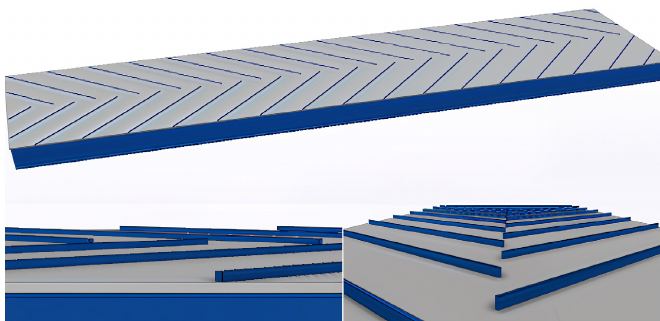
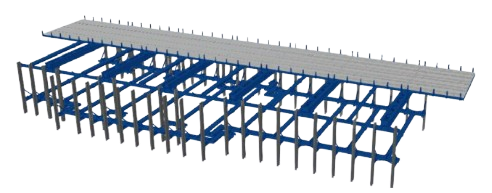
The most common method uses a site-specific structural steel frame with main girders, intermediate girders and a deck surface of steel, concrete, wood or asphalt. Because site conditions are uncertain, much of the work is done on site during installation.
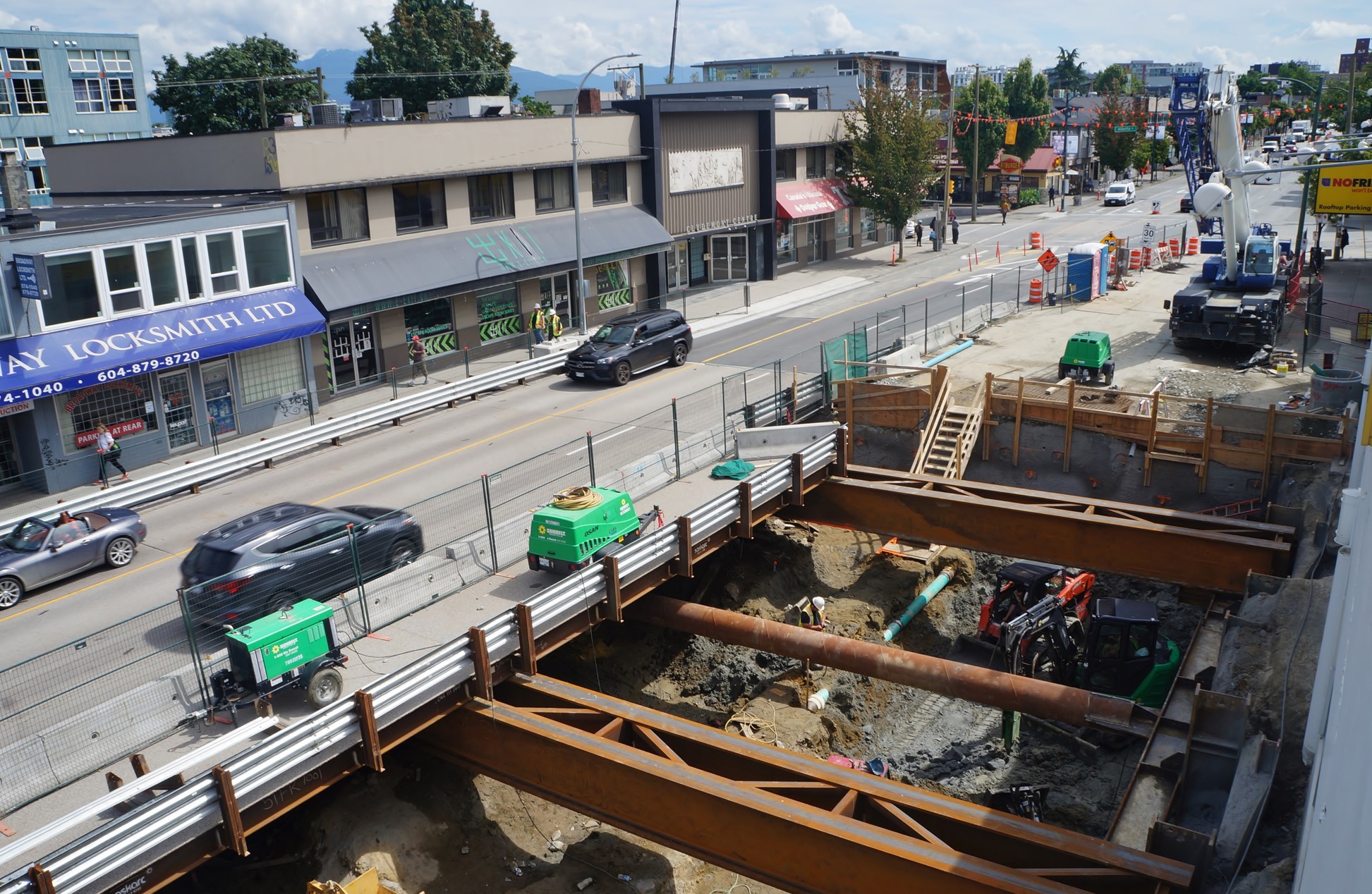
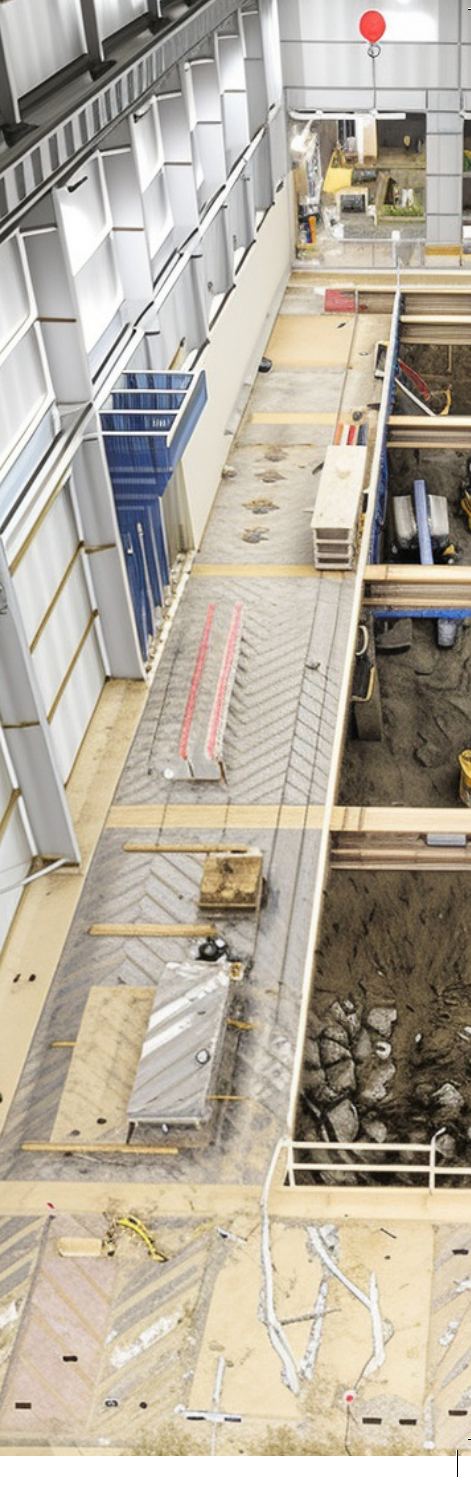
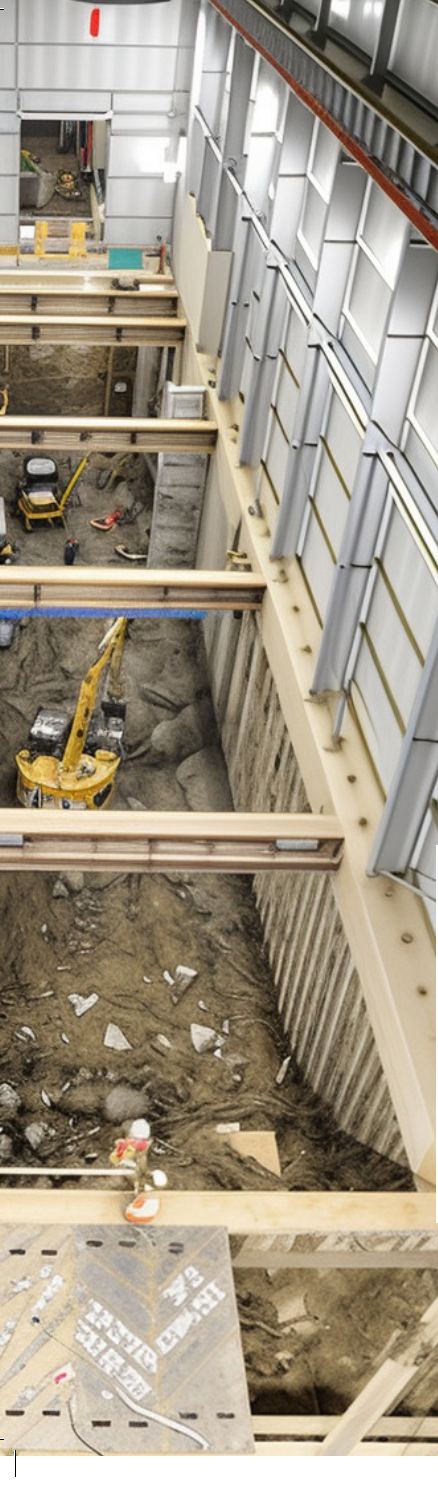
Support of excavation system, with deck modules and traffic barriers installed.
Why Traditional Decks Struggle

Four constraints of site-built decking

01

High on-site labor demand

Requires specialized, highly skilled welders and strict quality control.
02

Limited flexibility

Once installed, they are difficult to modify to meet the changing needs of a dynamic excavation.
03

Site constraints

Weather, space limitations and restricted use of hot work impede welding and fitting, impacting timelines and quality standards.
04

Multiple contractors

Structural steel, welding, wood deck installation and asphalt.
infraMOD Solution

A simple-to-assemble modular decking system

Using our innovative infraMOD™ methodology, we design and supply a modular decking system built for quick, uncomplicated installation, reducing specialized site resources and associated risks.

~50–60% faster installation

The majority of work is performed off-site, in parallel with other site activities.

Significantly less field welding

Fewer hot-work constraints and less dependence on specialized welders on site.

Replaces wood and asphalt

Deck modules are designed to replace wood and asphalt pavement, with factory-applied slip-resistant coatings.

Trial assembled in the shop

Modular systems can be trial assembled before delivery, ensuring perfect fit-up during site installation.

Reusable across stages and sites

Deck modules and girders can be shared across various stages, and different sites, if the construction schedule allows.

One-and-done solution

Once the deck modules are installed, no additional contractors are needed for wood decking or asphalt.

Delivered fully shop-assembled

Deck modules arrive on site as complete modules, with no further assembly required.

Easy to reconfigure

Quickly reconfigure the layout of decking panels or provide temporary access to the excavation without compromising safety or schedule.

Quiet operation

Quiet for workers in the excavation and the public, unlike wood systems that are known to rattle and shake.

Low environmental impact

Steel is one of the most recycled materials globally, with a recycling rate that exceeds 90%, reducing demand for raw materials and production energy.

Low disposal costs

Instead of paying end-of-project disposal costs for wood decking and asphalt, the steel decking system has a resale value (for example, buyback by infraMOD).
Common Questions & Key Facts

What you need to know

Steel girders
span the excavation and carry the deck panels
HFST
factory-applied high friction surface treatment
~12 m
typical panel length
~10 tons
typical panel weight
Question 1

What is a traffic deck made of?

A traffic deck is made up of steel girders spanning an excavation, which support modular panels that form the top layer of the deck.
Question 2

What special coating is used on the traffic decks?

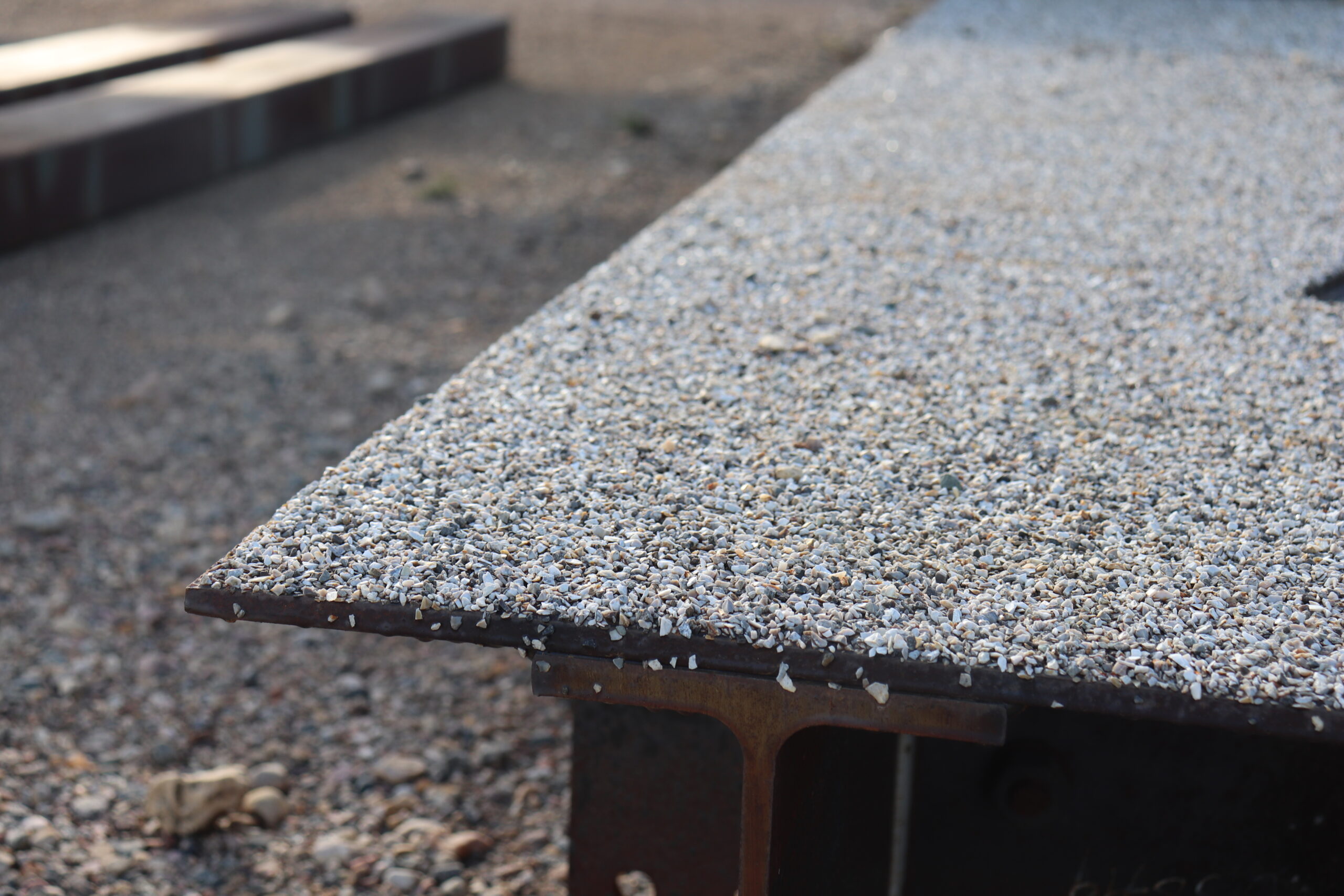
For public traffic applications, each module has a proprietary, factory-applied High Friction Surface Treatment (HFST), designed to maximize traction and significantly reduce the risk of skidding, especially in wet or critical traffic zones.
Question 3

Can you build a traffic deck without closing the road?

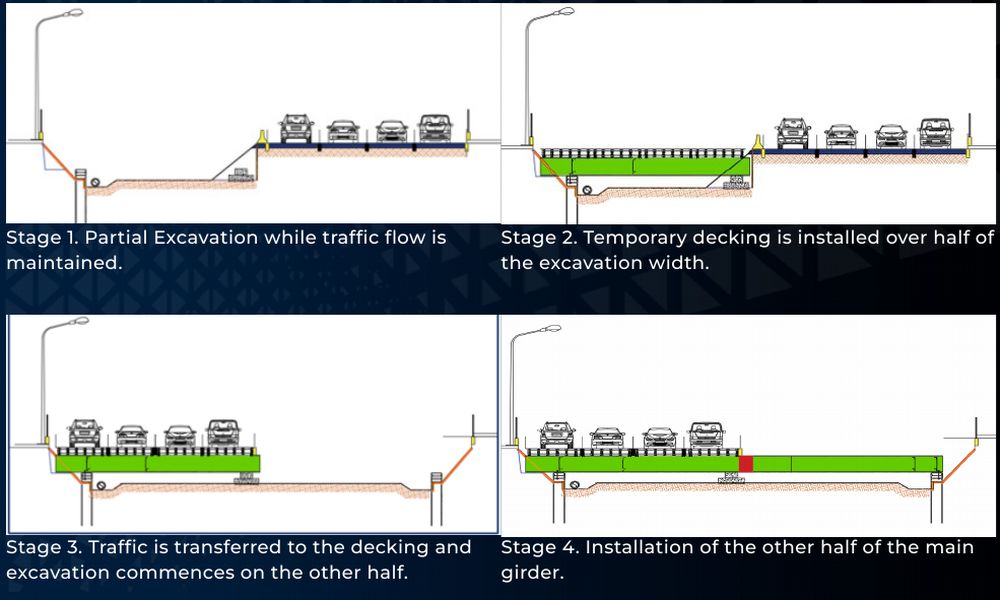
Yes. After one side of the traffic deck is finished, vehicles move onto the finished deck while the other side of the road gets excavated. Once both sides are done, four lanes of traffic move on the deck over the construction area.
1

Partial excavation

Traffic flow is maintained.
2

Deck over half the width

Temporary decking is installed over half of the excavation width.
3

Traffic transferred

Traffic moves onto the deck and excavation starts on the other half.
4

Second half installed

The other half of the main girder is installed.
Question 4

How big and heavy is each panel?

Although various panel sizes are used, the typical panels are 12 meters long and each panel weighs about 10 tons.
Case Study

Broadway Subway Project

A 5.7 km extension of the Millennium Line, providing efficient SkyTrain service to British Columbia’s hotspots.
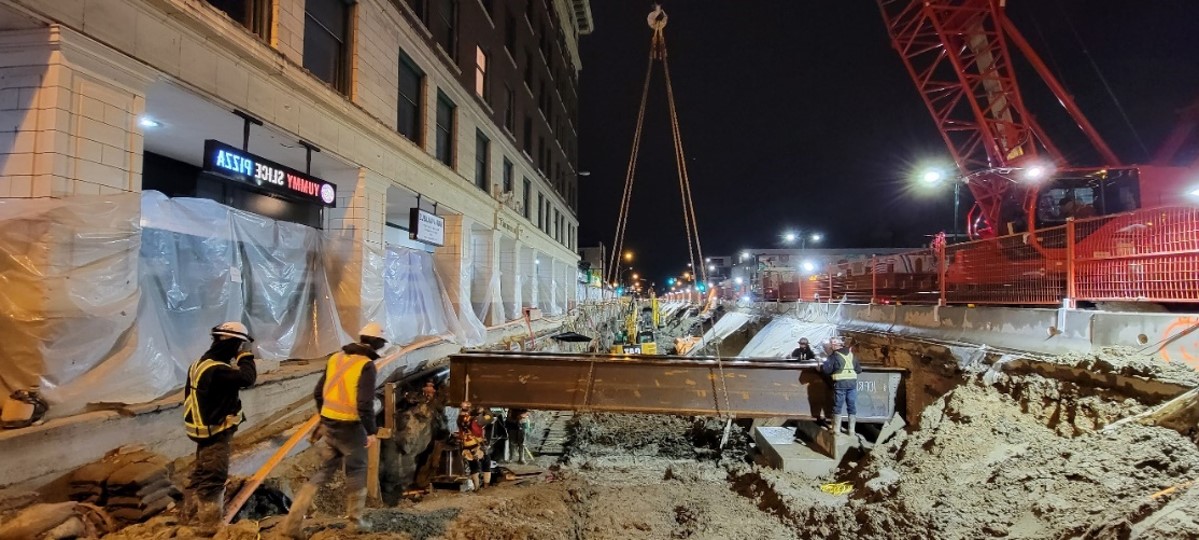
infraMOD was approached by Acciona-Ghella JV to provide a solution for design, supply and delivery of a temporary traffic decking system. The project required Support of Excavation (SOE) at 5 stations, a cut and cover, and a TBM to travel between the stations.
infraMOD supplied 7,000 tonnes of fabricated steel and an additional 4,000 tonnes of raw material. Thanks to our relationships with steel mills, we supplied the raw piling material at a lower cost than our customer or the piling contractors could purchase it for.
Owner
Government of BC
General contractor
Acciona-Ghella JV
Location
Vancouver, British Columbia
Completion
2026
Deck area
16,000 square meters of traffic deck
7,740
engineering design hours
8,500
design hours for construction support
11,000+
tons of steel supplied and fabricated
500+
truckloads of steel delivered

Build a traffic deck without closing the road

Traffic moves onto the finished half of the deck while the other half of the road is excavated. When both sides are done, four lanes run on the deck over the construction area. Step through the sequence.

Cross-section of a road being excavated and decked in stages West halfEast half

“Through the entire project, we worked with a very professional and dedicated Saskarc Project Team, who maintained the highest level of quality and safety.”
Javier Sanz Mugica
Project Director, Acciona-Ghella JV · Broadway Subway Project
Case Study

Ontario Line South Project

Ontario Transit Group needed decking that lets trucks pass over the excavation to haul muck away from the construction below. infraMOD reviewed the existing design to remove complexity and increase efficiency, with no site welding for installation, removal or reconfiguration of the deck panels.

Design constraints

Using the infraMOD™ design methodology, we reassessed the existing design and carried out our own analysis to provide a simple-to-assemble modular system for quick, uncomplicated installation.

How the infraMOD system benefits the project

~80%
reduction in the quantity of structural steel pieces to install on site.
~50–60%
reduction in installation duration, with the majority of work performed off-site in parallel with other site activities.
Flexible
Quickly reconfigure decking panel layout or provide temporary access through the excavation without compromising safety or schedule.
Dual use
The girders supporting the decking also serve as support of excavation struts.
No welding
No site welding for installation, removal or reconfiguration of deck panels.
Due to concern of damage to the anti-skid coating from metal tracked equipment, the deck surfaces include a steel traction bar solution.

Let’s discuss your next project

let's talk soe

Tell us about your excavation and our engineers will help you find the right traffic and equipment decking solution.

Oxbow | Toronto | Vancouver | Regina | Edmonton | Charleston

What We Do / Support of Excavation / Traffic & Equipment Decking
Moving people and equipment safely

Traffic &
Equipment Decking

Modular steel decking that keeps traffic, pedestrians and construction equipment moving above an active excavation, installed in a fraction of the time of site-built decks.
01 Industry Challenges

Cut and cover without shutting down the street

Cut and cover tunneling is usually the most economical construction method, but it can be highly disruptive, especially in urban areas where excavations are beneath streets or close to utilities and businesses. A temporary traffic deck lessens that disruption.

What is a traffic deck?

A traffic deck ensures safe passage over an active excavation, enabling uninterrupted construction in the excavation while maintaining access above for pedestrians, public vehicle traffic and/or construction equipment.

The most common method uses a site-specific structural steel frame with main girders, intermediate girders and a deck surface of steel, concrete, wood or asphalt. Because site conditions are uncertain, much of the work is done on site during installation.

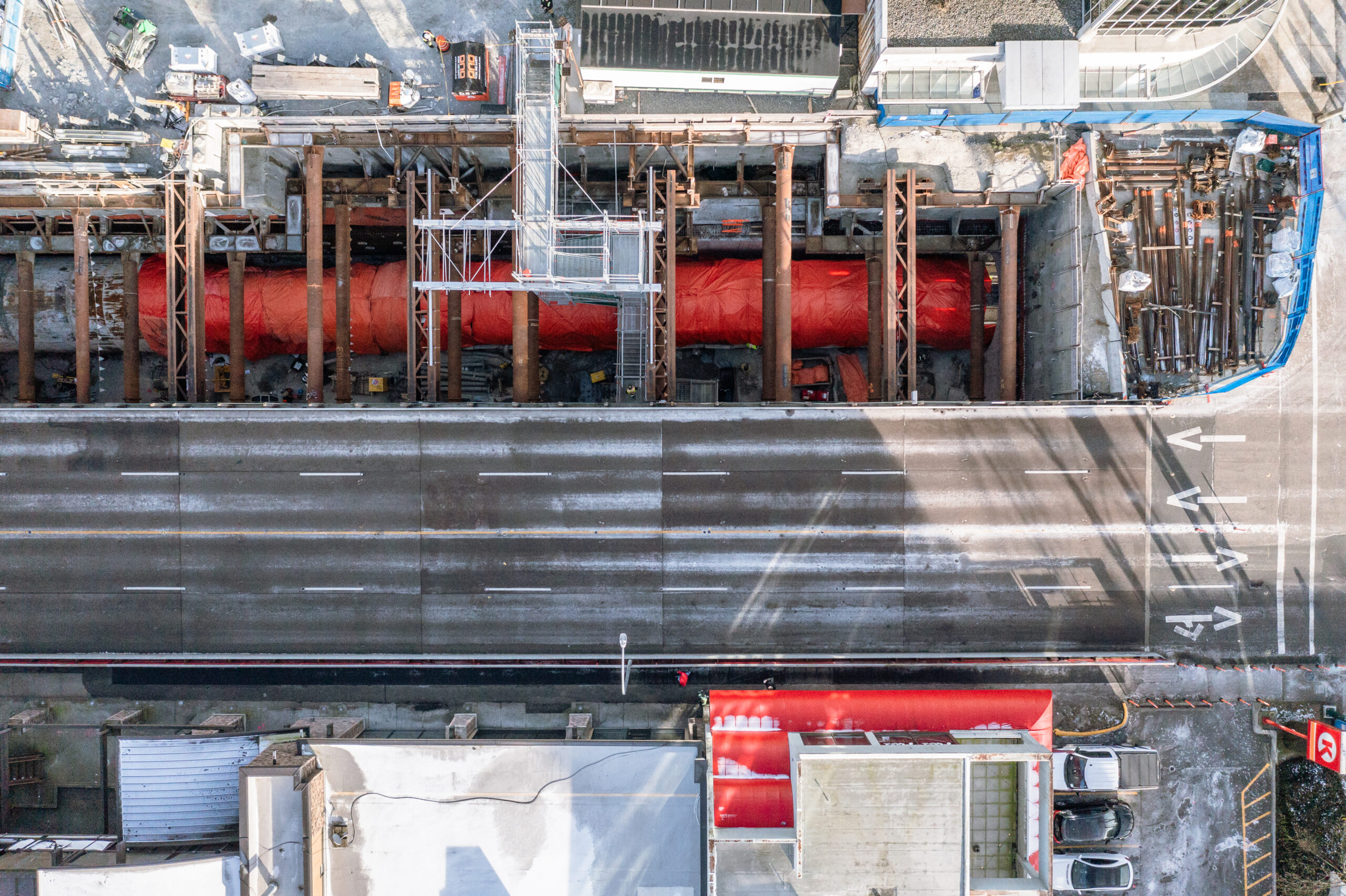
Support of excavation system, with deck modules and traffic barriers installed.

02 Site-built constraints

Why traditional decks struggle

C-01

Labor intensive

High on-site labor demand: specialized, highly skilled welders and strict quality control.

C-02

Hard to modify

Difficult to alter once installed to meet the changing needs of a dynamic excavation.

C-03

Site constraints

Weather, space limitations and restricted use of hot work impede welding and fitting, impacting timelines and quality standards.

C-04

Multiple contractors

Structural steel, welding, wood deck installation and asphalt.

03 infraMOD Solution

A simple-to-assemble modular decking system

Using our innovative infraMOD™ methodology, we design and supply a modular decking system built for quick, uncomplicated installation, reducing specialized site resources and associated risks.

~50–60% faster installation

The majority of work is performed off-site, in parallel with other site activities.

Significantly less field welding

Fewer hot-work constraints and less dependence on specialized welders on site.

Replaces wood and asphalt

Deck modules are designed to replace wood and asphalt pavement, with factory-applied slip-resistant coatings.

Trial assembled in the shop

Modular systems can be trial assembled before delivery, ensuring perfect fit-up during site installation.

Reusable across stages and sites

Deck modules and girders can be shared across various stages, and different sites, if the construction schedule allows.

One-and-done solution

Once the deck modules are installed, no additional contractors are needed for wood decking or asphalt.

Delivered fully shop-assembled

Deck modules arrive on site as complete modules, with no further assembly required.

Easy to reconfigure

Quickly reconfigure the layout of decking panels or provide temporary access to the excavation without compromising safety or schedule.

Quiet operation

Quiet for workers in the excavation and the public, unlike wood systems that are known to rattle and shake.

Low environmental impact

Steel is one of the most recycled materials globally, with a recycling rate that exceeds 90%, reducing demand for raw materials and production energy.

Low disposal costs

Instead of paying end-of-project disposal costs for wood decking and asphalt, the steel decking system has a resale value (for example, buyback by infraMOD).
04 Common Questions & Key Facts

Quick answers

Steel girders
span the excavation and carry the deck panels
HFST
factory-applied high friction surface treatment
~12 m
typical panel length
~10 tons
typical panel weight
Q1 • Construction

What is a traffic deck made of?

Steel girders spanning an excavation, which support modular panels that form the top layer of the deck.

Q2 • surface

What special coating is used?

For public traffic applications, each module has a proprietary, factory-applied High Friction Surface Treatment (HFST), designed to maximize traction and significantly reduce the risk of skidding, especially in wet or critical traffic zones.

Q3 • Traffic

Can you build a traffic deck without closing the road?

Yes. After one side of the traffic deck is finished, vehicles move onto the finished deck while the other side of the road gets excavated. Once both sides are done, four lanes of traffic move on the deck over the construction area.


Traffic moves onto the finished half of the deck while the other half of the road is excavated. When both sides are done, four lanes run on the deck over the construction area. Step through the sequence.

Cross-section of a road being excavated and decked in stages West halfEast half

Q4 • Size

How big and heavy is each panel?

Although various panel sizes are used, the typical panels are 12 meters long and each panel weighs about 10 tons.

 
05 Case Study

Proven on major transit projects

Broadway Subway Project

A 5.7 km extension of the Millennium Line, providing efficient SkyTrain service to British Columbia’s hotspots. infraMOD was approached by Acciona-Ghella JV to design, supply and deliver a temporary traffic decking system, with SOE at 5 stations, a cut and cover and a TBM between the stations.

infraMOD supplied 7,000 tonnes of fabricated steel and an additional 4,000 tonnes of raw material, sourced through relationships with steel mills at a lower cost than the customer or piling contractors could buy it for.

Owner
Government of BC
General contractor
Acciona-Ghella JV
Location
Vancouver, British Columbia
Completion

2026

Deck area
16,000 square meters of traffic deck
7,740

engineering design hours

8,500
design hours for construction support
11,000+
tons of steel supplied and fabricated
500+
truckloads of steel delivered
Due to concern of damage to the anti-skid coating from metal tracked equipment, the deck surfaces include a steel traction bar solution.

Ontario Line South Project

Ontario Transit Group needed decking that lets trucks pass over the excavation to haul muck away. infraMOD reviewed the existing design to remove complexity, with no site welding for installation, removal or reconfiguration of the deck panels.

Constraints: no additional substructure loads, no more than 800 mm depth, and support for utilities in place under the decking.

~80%
reduction in the quantity of structural steel pieces to install on site.
~50–60%
reduction in installation duration, with the majority of work performed off-site in parallel with other site activities.
Flexible
Quickly reconfigure decking panel layout or provide temporary access through the excavation without compromising safety or schedule.
Dual use
The girders supporting the decking also serve as support of excavation struts.
“Through the entire project, we worked with a very professional and dedicated Saskarc Project Team, who maintained the highest level of quality and safety.”
Javier Sanz Mugica
Project Director, Acciona-Ghella JV · Broadway Subway Project

Let’s discuss your next project

let's talk soe

Tell us about your excavation and our engineers will help you find the right traffic and equipment decking solution.

Oxbow | Toronto | Vancouver | Regina | Edmonton | Charleston