
What is the difference between NDT, NDE & NDI in Construction?
The Saskarc Design & Detailing Differentiator in Support of Excavation - Chapter 3
TL;DR
This article answers the oft asked question – What is the difference between Non-Destructive Testing (NDT) vs. Non-Destructive Evaluation (NDE) vs. Non-Destructive Inspection (NDI) in Construction. It covers the importance of testing, lists different types within each method, and explains the specific areas it is best suited for. While used in multiple use cases, we also mention its usage in the construction industry – with specific focus on temporary works (also known as support of excavation).
Table of Contents
▲- TLDR
- Why Is Testing Important In Structural Steel - Specially Temporary Works Steel.
- What Are The Different Types of Testing Apart From Non-Destructive Testing?
- Here are the alternatives and nuanced approaches to material evaluation:
- Semi-Destructive Testing (SDT)
- Analytical and Material Characterization Techniques
- Simulation and Modeling (DigitalTesting)
- Advanced "In-Situ" Monitoring
- Summary of Differences
- What is NDT & NDE & NDI?
- What is NDT (Non-Destructive Testing)?
- What is NDE (Non-Destructive Examination)?
- What is Non-Destructive Inspection (NDI)
- Key Differences Between NDT (Non-Destructive Testing) & NDE (Non-Destructive Examination)
- Non-Destructive Testing Codes and Standards
- What is the importance of NDT and NDE in the Construction Industry?
- Frequently Asked Questions: NDT, NDE & NDI in Construction
- Basic Concepts
- Q: What do NDT, NDE, and NDI stand for?
- Q: Are NDT, NDE, and NDI the same thing?
- Q: What's the main difference between NDT and NDE?
- Testing Methods
- Q: What are the most common types of NDT methods?
- Q: Besides non-destructive testing, what other testing types exist?
- Q: What is Semi-Destructive Testing?
- Application in Construction?
- Q: Why is NDT/NDE important in construction?
- Q: Why is testing especially important for temporary works steel?
- Q: What types of damage can NDT/NDE detect in structural steel?
- Technical Details
- Q: How does Ultrasonic Testing work in NDE?
- Q: What is the difference between NDT output and NDE output?
- Q: Who performs NDT versus NDE?
- Practical Considerations
- Q: How does NDT/NDE reduce project costs and delays?
- Q: Does NDT/NDE support legal compliance?
- Q: Can NDT/NDE improve monitoring reliability?
- Q: How does NDT/NDE contribute to continuous improvement?
- Industry Usage
- Q: In what industries is NDT commonly used besides construction?
- Q: When should I use the term NDI instead of NDT or NDE?
Table of Contents
Why Is Testing Important In Structural Steel - Specially Temporary Works Steel.
Testing of structural steel in temporary works is critical because these elements carry high risk during short, heavily loaded stages. Listed below are some of the reasons why we carry out testing on steel created for excavation support projects. NDT/NDE methods are generally selected as they provide assurance without damaging the steel.
Prevents catastrophic collapse
NDT/NDE helps detect critical weld and material defects before loading, reducing the risk of sudden failure of shoring, bracing, or falsework.
Verifies weld quality
Methods like Ultrasonic Testing (UT), Radiographic Testing (RT), Magnetic Particle Testing (MT), Penetrant Testing (PT), and Visual Testing (VT) confirm weld integrity at highly stressed nodes and connections in frames, struts, and walers.
Confirms fabrication matches design
Dimensional checks plus NDT/NDE ensure member sizes, weld types, and details conform to design assumptions used for temporary works capacity.
Enables safe reuse of components
NDT/NDE allows reused temporary steel (struts, walers, posts) to be screened for cracks, deformation, or corrosion before being put back into service.
Controls hidden damage from handling
Non‑destructive methods can reveal damage from lifting, impact, or over‑stressing that may not be obvious visually but undermines capacity.
Supports legal and standards compliance
Demonstrable NDT/NDE records help show that temporary works steel meets safety obligations and recognized codes/standards for structural integrity.
Improves reliability of monitoring data
When steel and weld quality are verified, load and movement monitoring on temporary works more reliably reflects ground/structural behavior, not fabrication defects.
Reduces rework and delays
Early detection of defects via NDT/NDE in the shop avoids costly site repairs, temporary propping changes, and programme disruption.
Builds confidence for high‑risk stages
For major lifts, deep excavations, or staged transfers, tested steel and documented NDE results give engineers and contractors confidence to proceed.
Supports lifecycle learning and improvement
Collated NDT/NDE findings from temporary works feed back into better details, fabrication practices, and inspection focus on future projects.
What Are The Different Types of Testing Apart From Non-Destructive Testing?
Just so you know, there are multiple types of testing. Not just the non-destructive type. They include
Destructive Testing (DT).
This means exactly what the name suggests.
- Destructive testing is undertaken in order to understand a specimen’s performance or material behaviour.
- These procedures are carried out to test the specimen’s failure point.
- Destructive testing procedures can either follow specific standards or can be tailored to reproduce set service conditions.
- Destructive testing methods are commonly used for materials characterisation, fabrication validation, failure investigation, and can form a key part of engineering critical assessments.
- While powerful, this method is not scalable and from an operational perspective cost is certainly a downside.
DT includes methods like
- Tensile and compression tests: measure strength, elasticity, yield and breaking point
- Fatigue testing: repeated loading cycles until failure
- Impact and fracture toughness tests: understand behavior under shock or crack propagation
- Creep tests: evaluate long-term deformation under constant load and temperature
Here are some examples of destructive testing:
- Macro sectioning: Macro sectioning tests a small section of a welded material by polishing and etching it for examination.
- Tensile testing: Also called tension testing, this is a destructive testing technique that uses controlled tension applied to a sample material to see how it reacts. Tension could be applied to test certain loads or conditions, or to test a material’s failure point.
- 3 point bend testing: 3 point bend testing examines the soundness and flexibility (or ductility) of a material by taking a sample of it, called a coupon, and bending it in three points to a specified angle.
While Destructive Testing (DT) and Non-Destructive Testing (NDT) are the two primary categories for assessing material integrity, there are other approaches, intermediate techniques, and specialized characterization methods that do not fit neatly into these two boxes.
What Are The Different Types of Testing Apart From Non-Destructive Testing?
Just so you know, there are multiple types of testing. Not just the non-destructive type. They include
Destructive Testing (DT).
This means exactly what the name suggests.
- Destructive testing is undertaken in order to understand a specimen’s performance or material behaviour.
- These procedures are carried out to test the specimen’s failure point.
- Destructive testing procedures can either follow specific standards or can be tailored to reproduce set service conditions.
- Destructive testing methods are commonly used for materials characterisation, fabrication validation, failure investigation, and can form a key part of engineering critical assessments.
- While powerful, this method is not scalable and from an operational perspective cost is certainly a downside.
DT includes methods like
- Tensile and compression tests: measure strength, elasticity, yield and breaking point
- Fatigue testing: repeated loading cycles until failure
- Impact and fracture toughness tests: understand behavior under shock or crack propagation
- Creep tests: evaluate long-term deformation under constant load and temperature
Here are some examples of destructive testing:
- Macro sectioning: Macro sectioning tests a small section of a welded material by polishing and etching it for examination.
- Tensile testing: Also called tension testing, this is a destructive testing technique that uses controlled tension applied to a sample material to see how it reacts. Tension could be applied to test certain loads or conditions, or to test a material’s failure point.
- 3 point bend testing: 3 point bend testing examines the soundness and flexibility (or ductility) of a material by taking a sample of it, called a coupon, and bending it in three points to a specified angle.
While Destructive Testing (DT) and Non-Destructive Testing (NDT) are the two primary categories for assessing material integrity, there are other approaches, intermediate techniques, and specialized characterization methods that do not fit neatly into these two boxes.
Here are the alternatives and nuanced approaches to material evaluation:
1. Semi-Destructive Testing (SDT)
These methods cause minimal, often repairable damage to the component, falling between NDT and DT.
- Hardness Testing (e.g., Brinell, Rockwell): Creates a tiny, usually insignificant indentation on the surface to measure resistance.
- Proof Loading/Proof Testing: The component is subjected to a load higher than its service load but lower than its failure point to verify structural integrity.
- Trepanation/Core Drilling: Taking a small plug from a concrete structure or pipe to test in a lab.
2. Analytical and Material Characterization Techniques
Rather than testing the physical strength or finding cracks, these techniques identify the chemical composition, microstructure, or phase of a material. Many are non-destructive, but some require sample preparation.
- X-ray Diffraction (XRD): Analyzes the atomic structure of crystalline materials to identify phases.
- Spectroscopy (XRF, FTIR, EDS): Used to determine the chemical composition and elemental makeup of materials.
- Microscopy (SEM, TEM, AFM): Scanning Electron Microscopy (SEM) and Atomic Force Microscopy (AFM) are used to study the surface topography and grain structure at high magnification.
3. Simulation and Modeling (Digital Testing)
- Finite Element Analysis (FEA): A computer-based simulation that predicts how a product will react to real-world forces, heat, and vibration without physically testing it.
- Digital Image Correlation (DIC): Using high-speed cameras and software to measure deformations and strains while a component is under load.
4. Advanced “In-Situ” Monitoring
These methods are technically NDT but are unique in that they monitor the component while it is in operation.
- Acoustic Emission Testing (AE): Passive sensors listen for energy releases (sound waves) generated by growing cracks or material stress during use.
- Structural Health Monitoring (SHM): Embedded sensors permanently installed in a structure (like a bridge) that constantly report on its integrity.
Here are the alternatives and nuanced approaches to material evaluation:
1. Semi-Destructive Testing (SDT)
These methods cause minimal, often repairable damage to the component, falling between NDT and DT.
- Hardness Testing (e.g., Brinell, Rockwell): Creates a tiny, usually insignificant indentation on the surface to measure resistance.
- Proof Loading/Proof Testing: The component is subjected to a load higher than its service load but lower than its failure point to verify structural integrity.
- Trepanation/Core Drilling: Taking a small plug from a concrete structure or pipe to test in a lab.
2. Analytical and Material Characterization Techniques
Rather than testing the physical strength or finding cracks, these techniques identify the chemical composition, microstructure, or phase of a material. Many are non-destructive, but some require sample preparation.
- X-ray Diffraction (XRD): Analyzes the atomic structure of crystalline materials to identify phases.
- Spectroscopy (XRF, FTIR, EDS): Used to determine the chemical composition and elemental makeup of materials.
- Microscopy (SEM, TEM, AFM): Scanning Electron Microscopy (SEM) and Atomic Force Microscopy (AFM) are used to study the surface topography and grain structure at high magnification.
3. Simulation and Modeling (Digital Testing)
- Finite Element Analysis (FEA): A computer-based simulation that predicts how a product will react to real-world forces, heat, and vibration without physically testing it.
- Digital Image Correlation (DIC): Using high-speed cameras and software to measure deformations and strains while a component is under load.
4. Advanced “In-Situ” Monitoring
These methods are technically NDT but are unique in that they monitor the component while it is in operation.
- Acoustic Emission Testing (AE): Passive sensors listen for energy releases (sound waves) generated by growing cracks or material stress during use.
- Structural Health Monitoring (SHM): Embedded sensors permanently installed in a structure (like a bridge) that constantly report on its integrity.
Summary of Differences
| Type | Impact on Material | Purpose |
|---|---|---|
|
DT |
Destroys/Alters Sample
|
Determine ultimate strength/limit
|
|
NDT |
None |
Find flaws, ensure serviceability
|
|
SDT
|
Minimal/Repairable
|
Measure properties with minor impact
|
|
Analytical
|
None to minor
|
Identify composition/microstructure
|
|
Simulation
|
None (Virtual)
|
Predict performance
|
In practice, a combination of these methods is often used to get a complete picture of a material’s behavior.
What is NDT, NDE & NDI?
Non-destructive testing (NDT) and non-destructive examination (NDE) are terms often used interchangeably in industries such as construction, manufacturing, and aerospace. While they share many similarities, they have distinct differences that are important to understand for those working in these fields.
When assessing the quality and integrity of materials, most people do it in two ways.
Non-Destructive Testing (NDT) is the first. The second is known as Non-Destructive Evaluation (NDE).
There is also a distant cousin of these called the Non-Destructive Inspection (NDI). However, NDI, as a term, isn’t used as much in the construction industry. In standards and industry articles, NDI is considered essentially the same as NDT or NDE.
NDT & NDE methods play a crucial role in many industries. The simplest way to distinguish the two methods is to think about how they’re used.
- In its simplest form, NDT testing examines material in real-time.
- Non-Destructive Evaluation (NDE) examines a material once it is ‘complete’.
While the terms NDT and NDE are often used, it’s crucial to grasp the key distinctions between them.
So, to outline the difference between NDT and NDE, here are some simpler explanations of the two.
What is NDT (Non-Destructive Testing)?
NDT (Non-Destructive Testing) is a broad group of analysis techniques and testing methods. It is used to evaluate a material, component, system or structure for potential flaws and problems like cracks or voids. All without causing damage to the material / structure. This ensures the safety and reliability of the inspected items. Since NDT does not permanently alter or damage the article being tested, it is considered a highly valuable technique to save money and time in product evaluation, troubleshooting, and research.
What are the different types of NDT?
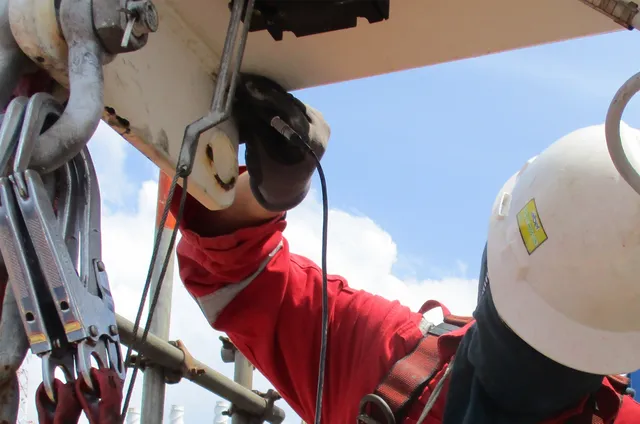
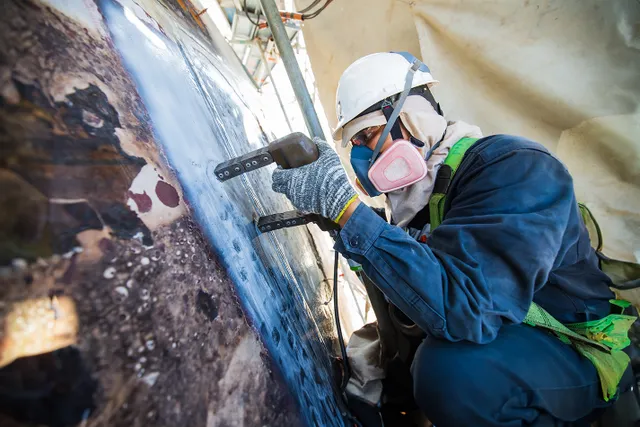
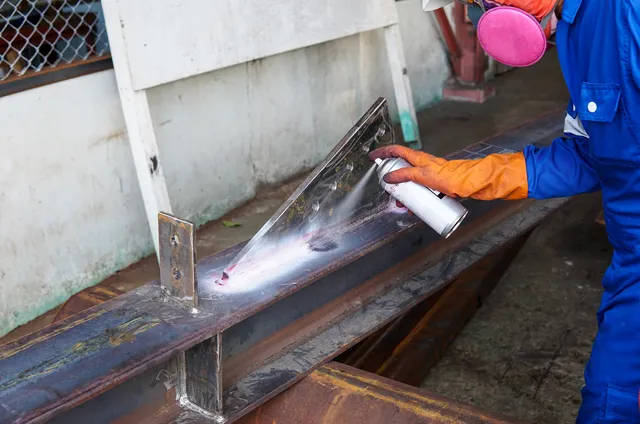
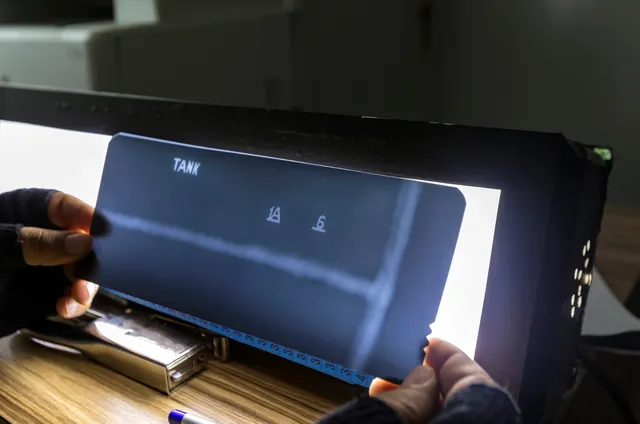
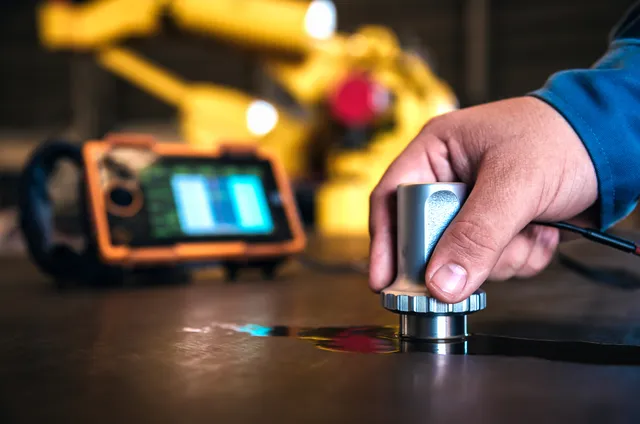
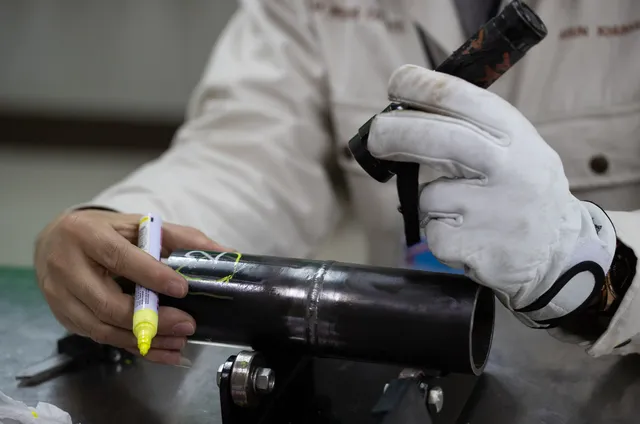
Now, NDT is carried out in a variety of ways. The six most frequently used methods are
Where is NDT used?
NDT is commonly used in forensic engineering, mechanical engineering, petroleum engineering, electrical engineering, civil engineering, systems engineering, aeronautical engineering, medicine, and art. Innovations in the field of nondestructive testing have had a profound impact on medical imaging, including on echocardiography, medical ultrasonography, and digital radiography.
Non-Destructive Testing (NDT) is used in the construction industry to detect defects that could compromise the integrity of infrastructure. Welds are one of the most common parts of industrial assets that inspectors test. Using non-destructive weld testing equipment, inspectors can determine whether a weld is strong or has potential defects that could compromise its integrity. (Ref: flyability.com)
The most common flaws found in weld NDT are:
- Poor weld quality due to the presence of slag
- Fatigue caused by human error
- Flaws caused by incorrect technique or setup in how the weld was created
- Environmental damage to the weld (i.e., temperature extremes, the presence of moisture, or the use of incompatible metals)
What is NDE (Non-Destructive Examination)?
Non-destructive examination (NDE) is a version/part of NDT that is designed to interpret and evaluate test results so decisions can be made on the integrity and safety of materials and structures. NDE covers the entire evaluation process while NDT is specific to the testing process itself. NDE includes the selection of appropriate testing methods, the execution of the tests, its analysis and interpretation of reports generated. In industries where material or structure failure can have serious consequences, such as steel used in deep dig excavation support, NDE is considered a critical component of quality assurance and safety programs.
Some quality professionals in construction consider Non-destructive examination (NDE) to be a more comprehensive approach. One that transcends mere defect detection. The objective is to identify a material’s strength, durability and function by examining its properties, structural integrity and corrosion resistance. It is done to ensure that the material retains its quality and integrity for a long time.
What are the different techniques used in NDE?
As discussed above, NDE’s objective is to deliver a comprehensive evaluation of the condition of the structures / materials. It is designed to identify potential defects and figure out how it impacts the overall integrity and performance of the item being inspected.
While NDT & NDE techniques are similar, the difference between NDE & NDT is that NDE places greater focus on the analysis and interpretation of test results.
Let us walk through this with some examples of the different techniques used in NDE
- Ultrasonic testing: In this, NDE is used not only to detect internal flaws, but also to evaluate their size, location, and orientation which helps figure out their impact on the material’s integrity.
- Radiographic testing: Under radiographic inspection, NDE is used to interpret the radiographs to identify defects and assess their significance.
- Phased Array Ultrasonic testing: This is an advanced technique using multiple ultrasonic elements to create detailed images of the internal structure of a material.
- Computed tomography (CT) scanning: This approach uses x-rays to create detailed 3D images of the internal structure of a material. This is not used a lot in construction. It is generally seen in aerospace and automotive industries since this technique is very effective for detecting and evaluating defects in complex geometries.
Non-Destructive Examination is used to determine the condition of welds, structural steel and concrete in the construction industry, including temporary works steel in excavation support. This methodology is also used to monitor the state of the infrastructure over time and address potential issues before they can cause irreparable harm.
What is Non-Destructive Inspection (NDI)
Non-Destructive Inspection or NDI, simply put, is a synonym used in sectors like aerospace or the military to refer to NDT / NDE. NDI is a naming variation. In normal construction and structural steel fabrication it does not mean something that is fundamentally different from NDT/NDE. Usage of NDI is mainly industry preference. We have seen some new testing methods that are labelled as Non-Destructive Inspection – such as Terahertz Imaging.
Terahertz waves sit between microwaves and infrared on the electromagnetic spectrum. They are non-ionizing and safe, yet highly sensitive to subtle changes in material properties such as:
- Thickness and layer structure
- Density and porosity
- Moisture / humidity content
- Hidden defects within non-conductive or multilayer materials
Because of these properties, terahertz imaging is particularly powerful for soft, multilayer, and absorbent structures such as those found in baby diapers, adult incontinence products, femcare, and many medical or hygiene products. It is supposed to be a safer testing approach in comparison to ionizing radiation used in many applications. (Ref: thiive.com)
In the construction or structural steel fabrication domain, if a code or spec wants or needs a finer distinction between NDI / NDT / NDE, it will define it explicitly.
Key Differences Between NDT (Non-Destructive Testing) & NDE (Non-Destructive Examination)
So far you have read about what NDT, NDE & NDI mean, their techniques and where they are generally used. Of the three, NDI is basically a synonym for NDT & NDE. While NDE is also considered a part of the NDT umbrella, certain sources do differentiate both of them. Let us have a look at the summarized differences below.
| Aspect | NDT – Nondestructive Testing | NDE – Nondestructive Examination/Evaluation |
|---|---|---|
|
Core focus |
The testing process itself: selecting test methods, setting up equipment, running tests, and recording indications.
|
The full evaluation process: analyzing and interpreting test results to judge integrity, safety, and fitness for service.
|
|
Main objective |
Detects defects and discontinuities (find flaws and characterize their size/location).
|
Determine the significance and impact of defects on overall performance, safety, and remaining life.
|
|
Scope of work
|
Method selection, calibration, scanning, image capture, reporting raw or lightly processed results.
|
Integrates test data with design, loading, history, and codes to make decisions on repairs, acceptance, or rejection.
|
|
Typical output
|
Data and indications: signals, images, maps, or lists of detected flaws.
|
Engineering assessment: defect criticality, fitness‑for‑service conclusions, and repair or monitoring recommendations.
|
|
Skill emphasis
|
Strong focus on correct equipment use, procedure adherence, and reliable detection of indications.
|
Additional emphasis on interpretation, fracture mechanics, materials behavior, and relevant codes/standards.
|
|
Personnel profile
|
NDT technicians/operators qualified to perform tests and recognize indications.
|
Personnel with extra training/experience to evaluate results and issue acceptance or repair decisions (often engineers or senior examiners).
|
|
Use in specs
|
Often the default term in construction/steel fabrication documents for weld and material testing requirements.
|
Sometimes used when the spec wants to stress not just testing, but also formal evaluation and acceptance criteria.
|
In many construction and structural steel specs, NDT and NDE are still used interchangeably, but this distinction (NDT = testing, NDE = testing plus evaluation) is a useful way to frame roles and responsibilities.
Non-Destructive Testing Codes and Standards
As with every framework, NDT codes and standards are integral to testing. This is done to establish uniformity and dependability in assessing structural integrity. Adherence to NDT codes and standards is imperative for quality control and identifying and managing risks. In industries where precision, industry compliance and verification are paramount, these regulations validate material integrity, weld quality and overall component performance.
The International Organization for Standardization (ISO), Canadian Standards Association, The American Society of Mechanical Engineers (ASME), the American Society for Testing and Materials (ASTM) are prominent bodies responsible for formulating NDT codes and standards. Other organizations which contribute to the creation of NDT codes and standards include:
- American Petroleum Institute.
- American Society for Nondestructive Testing.
- National Aerospace Standard (NAS) 410
- ANSI / ASNT CP189
- French Committee for Non-destructive Testing Studies.
- Canadian Standards Association.
- Canadian General Standards Board.
Certified NDE technicians are trained and qualified by the following:
- CANADA
- QCCC – Quality Control Council of Canada
- CWB – Canadian Welding Bureau
- CINDE – Canadian Institute for Non-Destructive Evaluation
- USA
- ASNT – American Society for Nondestructive Testing
- AWS – American Welding Society
- AINT – American Institute of Nondestructive Testing
- Several universities in the USA offer courses and industry-specific training
What is the importance of NDT and NDE in the Construction Industry?
Both NDT and NDE are critical elements of the quality assurance and safety programs in the construction and early works / temporary works steel industry. They are used to ensure the quality, reliability and safety of constructed structures by detecting defects early before they lead to catastrophes. NDT and NDE help prevent accidents, reduce downtime (which helps in maintaining project schedules), and thereby ensure the lifespan of infrastructure.
Frequently Asked Questions: NDT, NDE & NDI in Construction
Basic Concepts
NDT stands for Non-Destructive Testing, NDE stands for Non-Destructive Examination (or Evaluation), and NDI stands for Non-Destructive Inspection. These are methods used to evaluate materials and structures without causing damage to them.
While these terms are often used interchangeably in construction, there are subtle differences. NDT focuses on the testing process itself—selecting methods, running tests, and recording results. NDE is more comprehensive, involving the analysis and interpretation of test results to make decisions about material integrity and safety. NDI is essentially a synonym for NDT/NDE, primarily used in aerospace and military sectors rather than construction.
Think of NDT as the action of testing and detecting flaws, while NDE encompasses the entire evaluation process including analyzing what those flaws mean for the structure’s safety and performance. NDT answers “What defects are present?” while NDE answers “How significant are these defects and what should we do about them?”
Testing Methods
The six most frequently used NDT methods are:
Other testing approaches include Destructive Testing (which damages the specimen to understand its failure point), Semi-Destructive Testing (causing minimal, repairable damage like hardness testing), Analytical techniques (identifying chemical composition), Simulation and Modeling (computer-based predictions), and Advanced In-Situ Monitoring (continuous monitoring during operation).
Semi-Destructive Testing falls between NDT and Destructive Testing. It causes minimal damage that is often repairable or insignificant, such as small indentations from hardness testing, proof loading to verify structural integrity, or taking small core samples from concrete structures.
Application in Construction
NDT and NDE are critical for ensuring quality, reliability, and safety in construction. They detect defects early before they lead to catastrophic failures, help prevent accidents, reduce downtime, maintain project schedules, and extend the lifespan of infrastructure—all without damaging the materials being inspected.
Temporary works steel (used in excavation support, shoring, bracing, and falsework) carries high risk during short, heavily loaded stages. Testing prevents catastrophic collapse, verifies weld quality at stressed connections, confirms fabrication matches design specifications, and enables safe reuse of components. It’s particularly critical because these structures support major lifts and deep excavations where failure could be devastating.
NDT/NDE allows reused temporary steel elements like struts, walers, and posts to be screened for cracks, deformation, or corrosion before being put back into service. This ensures safety while maximizing the value of these components across multiple projects.
Technical Details
In NDE, ultrasonic testing goes beyond simply detecting internal flaws. It evaluates the size, location, and orientation of defects to determine their impact on the material’s integrity. Advanced techniques like Phased Array Ultrasonic Testing use multiple ultrasonic elements to create detailed images of a material’s internal structure.
NDT typically produces raw data and indications such as signals, images, maps, or lists of detected flaws. NDE output includes engineering assessments that determine defect criticality, fitness-for-service conclusions, and recommendations for repairs, acceptance, or monitoring.
NDT is typically performed by qualified technicians or operators trained in correct equipment use and procedure adherence. NDE often requires personnel with additional training and experience—such as engineers or senior examiners—who can interpret results, apply fracture mechanics knowledge, and make acceptance or repair decisions based on relevant codes and standards.
Practical Considerations
Early detection of defects in the fabrication shop through NDT/NDE avoids costly site repairs, eliminates the need for temporary propping changes, and prevents program disruption. This proactive approach is far more cost-effective than addressing problems after installation.
Yes, demonstrable NDT/NDE records help show that structural steel meets safety obligations and recognized codes and standards for structural integrity. This documentation is valuable for regulatory compliance and potential legal protection.
Absolutely. When steel and weld quality are verified through NDT/NDE, load and movement monitoring on temporary works more reliably reflects ground and structural behavior rather than fabrication defects, leading to better decision-making.
Collated NDT/NDE findings from temporary works projects feed back into better design details, improved fabrication practices, and refined inspection focus for future projects, creating a cycle of learning and improvement across the industry.
Industry Usage
NDT is widely used in forensic engineering, mechanical engineering, petroleum engineering, electrical engineering, aeronautical engineering, medicine (including medical imaging like echocardiography and ultrasonography), and even art conservation.
NDI is primarily used in aerospace and military sectors as a naming preference. In construction and structural steel fabrication, NDT or NDE are the standard terms. If a specification requires a distinction between these terms, it will define them explicitly within that document.
References
- Wikipedia
- Formatndt.co.uk
- Tihive.com
- Flyability.com
- https://cmhmetlabs.ca/services/chemical-analysis/
- https://www.sciencedirect.com/topics/engineering/charpy-impact-test
- www.cinde.ca
- www.cwbgroup.org/resources
- AWS Search Results | Find Information and Resources on AWS.org
- What is NDT? | Quality Control Council of Canada
- Explore Nondestructive Testing (NDT) Methods for Industry Safety
- A Complete Guide to Non-Destructive Testing | Unitek