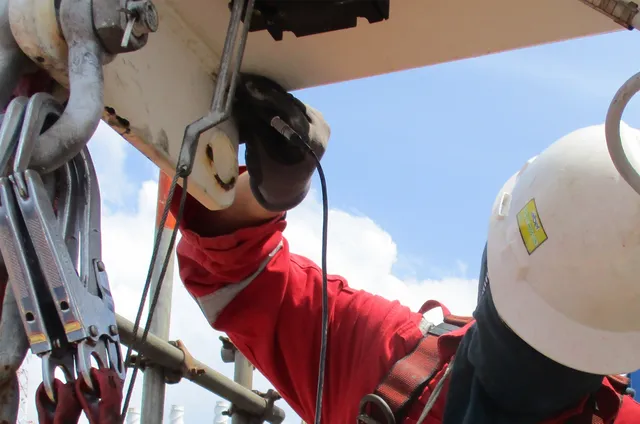
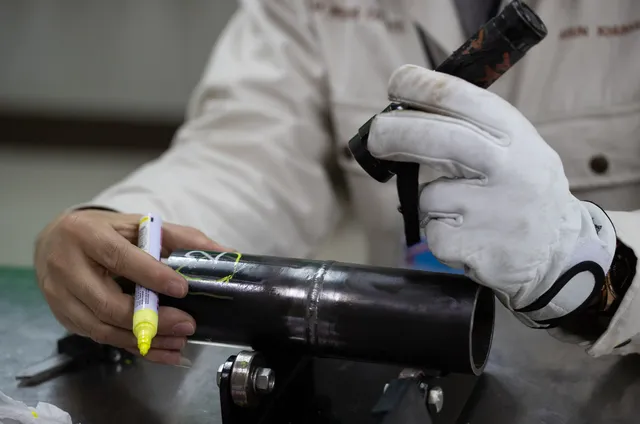
This article lists the types of non-destructive testing methods used in industry. They include liquid penetrant testing, magnetic particle, ultrasonic, eddy-current and visual testing methods. While these are the popular methods and used widely, there are other alternative methods under non-destructive testing. Methods such as acoustic emission, infrared testing, ground penetrating radar, guided wave testing, laser methods, leak testing, magnetic flux leakage, microwave testing, neutron radiography, and vibration analysis have niche industry specific utilization.
When we build structures or even products, there is always an expectation of quality. Which is why we test our creations before rolling them out for use. Over the years, Non-destructive testing, NDT for short, has gained popularity as a testing methodology and provides a means to ensure product reliability and quality.
Unlike destructive testing methods where samples undergo destructive forces to analyze quality metrics, NDT methods do not destroy the samples. This makes it far cheaper to conduct and at times provides pre-emptive indicators that help catch issues earlier in the manufacturing process.
There are many different forms of NDT/NDE. And sometimes people in different industries refer to them with different names such as NDT, NDE or NDI. Some are considered volumetric, and others are categorized as surface only. The top methods are
Liquid Penetrant / Dye penetrant testing
Magnetic Particle testing
Ultrasonic testing
Radiographic testing
Electromagnetic / Eddy current testing
Visual testing.
Visual Testing, Magnetic Particle and Liquid Penetrant Inspections are surface only, whereas Ultrasonic and Radiographic are considered volumetric, meaning that they are able to “look” inside the component to find defects that would not be visible without cutting into the component.
Depending on which code or standard a fabrication is built and welded to, there are different acceptance and rejection criteria for the different NDE disciplines.
At infraMOD, we perform Magnetic Particle, Liquid Penetrant, Ultrasonic and Radiographic Inspections. Some of these disciplines can be performed in-house, pro-actively, and some disciplines require a third party to come in and perform the testing and provide the reports. We employ staff that are certified in both CSA and ASNT disciplines as well as work with dedicated 3rd party companies if the need arises. We encourage in-house testing to minimize scheduling conflict with external services as well as decrease costs associated with them.
Ultimately, NDT/NDE is a way of confirming the quality, integrity and reliability of a weldment without doing any harm to the end product. The NDT/NDE reports give our customers the satisfaction that their product is up to the code or standard it was designed to.
Here a deeper look at some of the most common types of NDT/NDE:
LIQUID PENETRANT INSPECTION
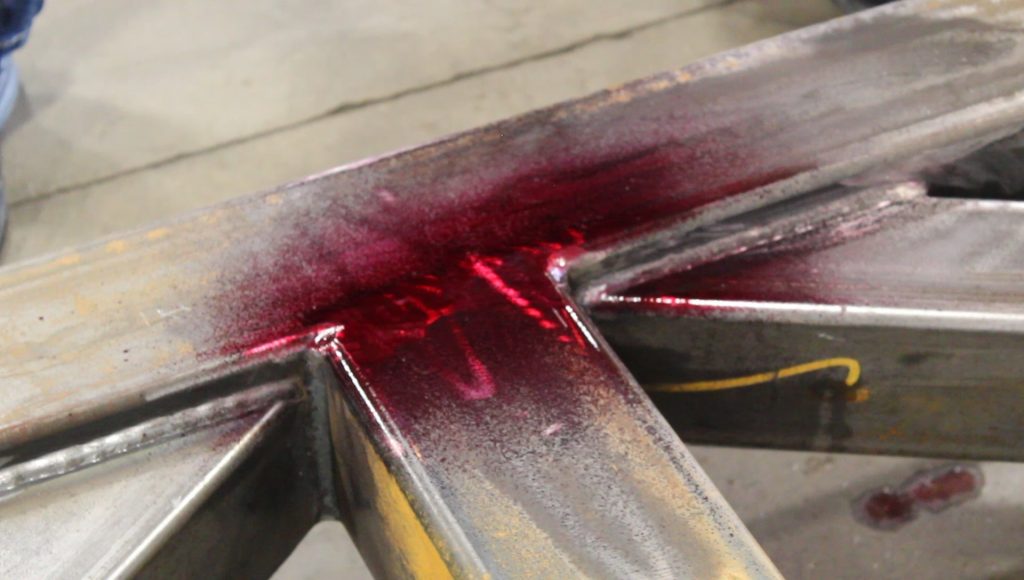
Liquid Penetrant Inspection pictured above is performed with a liquid with low viscosity called a penetrant which is applied to the surface of a part It then will penetrate into fissures and open to the surface Once the excess penetrant is removed the penetrant trapped in those voids will creep back out through capillary action creating an indication
Liquid penetrant is used to detect surface defects in both ferrous and non-ferrous materials. In infrastructure or structural engineering, liquid penetrant testing can be applied to check the integrity of welds and other structural components in bridges and other infrastructure projects.
How does liquid penetrant testing work?
Liquid Penetrant Inspection pictured above is performed with a liquid with low viscosity called a penetrant which is applied to the surface of a part It then will penetrate into fissures and open to the surface Once the excess penetrant is removed the penetrant trapped in those voids will creep back out through capillary action creating an indication
The basic principle of Liquid Penetrant Inspection (LPI) is that when a liquid with low viscosity – called a penetrant, is applied to the surface of a part, it will penetrate into fissures and open to the surface.
Once the excess penetrant is removed, the penetrant trapped in those voids will creep back out through capillary action, creating an indication.
Liquid Penetrant testing can be performed on magnetic and non-magnetic materials, but it doesn’t work well on porous materials. Penetrants may be “visible”, meaning they can be seen in ambient light, or fluorescent, requiring the use of a “black” light.
After applying the penetrant, it sits on the surface for a specified period of time, coined as the “penetrant dwell time”, then the part is carefully cleaned to remove excess penetrant from the surface. A light coating of developer is then applied to the surface and given time to allow the penetrant from any voids or fissures to seep up into the developer, creating a visible indication.
Following the developer dwell time, the part is inspected visually, with the aid of a black light when using fluorescent penetrants. Most developers are fine-grained, white talcum-like powders that provide a color contrast to the penetrant being used.
The liquid penetrant testing method is simple, versatile and cost efficient. It can be further improved by using bright coloured or fluorescent dyes. A drawback of this method is that it can only detect surface defects. This type of inspection is used in the same types of applications as magnetic particle testing but also on non-ferromagnetic materials, such as alloys and stainless steel.
Here is a helpful video from ASNT that provides an overview of liquid penetrant testing
What are the advantages of Liquid Penetrant Testing
Versatility: Liquid penetrant testing (LPT) can be used on a wide variety of nonporous materials, including metals, plastics, and ceramics.
Sensitivity to Small Defects: LPT is capable of detecting very small surface discontinuities that might not be visible to the naked eye. This includes fine cracks, pores, and other minute defects.
Cost-Effective: LPT does not require complex or expensive equipment, making it accessible and cost-effective.
Visual Clarity of Indications: Defects are typically easy to see with the naked eye once the penetrant process is complete, which facilitates straightforward interpretation and documentation.
Portability: Liquid Penetrant Testing equipment and materials are generally portable, allowing for on-site inspections in various environments, including field conditions.
Bulk Testing Capability: LPT can efficiently test large quantities of parts in a single operation. By covering all accessible surfaces at once, it is ideal for batch processes where small components are inspected simultaneously.
What are the disadvantages of Liquid Penetrant Testing
Surface-Only Detection: Liquid Penetrant Testing can only detect discontinuities that are open to the surface. It is not effective for detecting subsurface defects.
Material Restrictions: LPT is not suitable for porous materials, as the penetrant can seep into the material itself, making it difficult to identify actual defects.
Health and Safety Concerns: Some liquid penetrants, emulsifiers, and developers can cause skin irritation or other health issues. Proper safety precautions, including the use of personal protective equipment (PPE), are necessary. Handling and disposing of the chemicals used in liquid penetrant testing needs careful management due to their potential environmental and health hazards.
Cleaning and Condition Requirements: Meticulous surface cleaning before and after the inspection is essential to avoid contaminating the inspection results. Environmental factors such as high temperatures or winds can adversely impact the penetrant's application and effectiveness, requiring controlled conditions for accurate outcomes.
Magnetic Particle Testing
Magnetic Particle Testing is a very simple and cost-efficient process.
It uses magnetic fields to locate surface and near-surface discontinuities / defects in ferromagnetic materials (simply put, materials that are strongly attracted to magnets). Any defects found are measured against standards such as CSA W59 and ASME B31.3, to name a few. Magnetic particle testing is often used to ensure the integrity of critical components in various industries and infrastructure projects that require steel structures.
– Image courtesy of ASNT.org
How does Magnetic Particle Testing work?
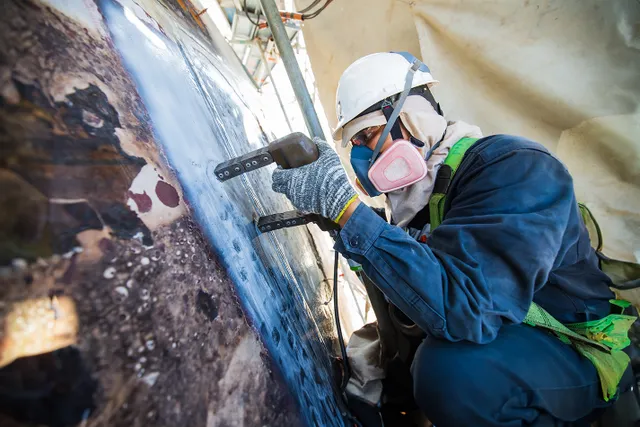
In the magnetic particle testing method, a magnetic field is introduced into the part being inspected. Technicians use various equipment such as yokes, coils, or prods to magnetize the material.
The magnetic field can be applied with a permanent magnet, electromagnet or by running a current through the component. The magnetic field can be orientated circularly or longitudinally. The magnetic field can be applied using either alternating current (AC) or direct current (DC), depending on the inspection requirements.
Circular magnetic fields are generated by passing a current through a conductor surrounded by the component. A longitudinal magnetic field is produced when using a coil, permanent magnet or electromagnet.
An orientation of 45 to 90 degrees between the magnetic field and the defect is necessary to form an indication. When this happens, the flux lines produce a magnetic leakage. Because magnetic flux lines don’t travel well in air, when very fine colored magnetic particles are applied to the surface of the part the particles will be drawn into the discontinuity. This reduces the air gap, and produces a visible indication on the surface of the part.
A detection medium is then applied which contains magnetic particles that will group around defects that cause irregularities in the magnetic field.
The magnetic particles (detection media) can be a dry powder, or suspended in a liquid solution, and they may be colored with a visible dye or a fluorescent dye that fluoresces under an ultraviolet light. These particles are attracted to areas where the magnetic field is disrupted by discontinuities, such as cracks or voids, forming visible indications. By analyzing these indications, qualified technicians can identify the location and size of surface and near-surface discontinuities. The magnetic particle testing process is done either in the field, using portable magnetic yokes, or in a shop using a magnetic bench. The bench is more efficient for large volumes of work.
What are the advantages of Magnetic Particle Testing
Surface and Near-Surface Inspection: MT is highly effective at detecting surface and slightly subsurface discontinuities.
Quick and Relatively Simple: The process is relatively quick, making it suitable for time-sensitive projects.
Cost-Effective: Compared to some other NDT methods, MT is relatively low-cost.
Versatility: MT can be used on a variety of ferromagnetic materials, including iron, nickel, cobalt, and their alloys. It is applicable to different shapes and sizes of test objects, from small components to large structures.
Immediate Results: The results of an MT inspection are visible immediately, allowing for quick decision-making regarding the integrity of the test object.
Portable Equipment: Some MT equipment setups are portable, making it possible to perform inspections in the field or in remote locations.
Quantitative Insights: MT not only detects flaws but also provides valuable information about their size, orientation, and severity.
What are the disadvantages of Magnetic Particle Testing
Limited to Ferromagnetic Materials: Magnetic Particle Testing (MPT) can only be used on materials that can be magnetized.
Surface Preparation: The surface of the test object must be clean and free of contaminants, which can add time and effort to the inspection process.
Depth Limitation: MPT is primarily effective for detecting surface and near-surface discontinuities. It may not be able to detect deeper flaws that are located further below the surface.
Demagnetization Required: After the inspection, the test object often needs to be demagnetized to remove any residual magnetism, requiring additional time and specialized equipment.
Environmental Conditions: Extreme temperatures or high humidity, can affect the performance of Magnetic Particle Testing. For example, magnetic particles may not adhere properly in very humid conditions.
Health and Safety Concerns: Certain magnetic particles may pose health and safety concerns. Proper handling and disposal procedures must be followed to mitigate these risks.
Radiographic Testing
Radiographic testing (commonly referred to as industrial radiography) is a method of viewing the internal conditions and structure of a component using ionizing electromagnetic radiation of X-rays and/or gamma rays to produce visible images. It is similar to the use of X-ray in healthcare to determine bone fractures in patients.
The traditional radiography method is the process of making a permanent record on radiographic film of test objects in order to detect defects.
While highly beneficial to numerous industries due to its ability to find subsurface flaws that may lead to failure of a component in service. However, it does come with inherent safety risks, as radiation can be dangerous to humans without the proper precautions.
– Image courtesy of ASNT.org
How does Radiographic Testing work?
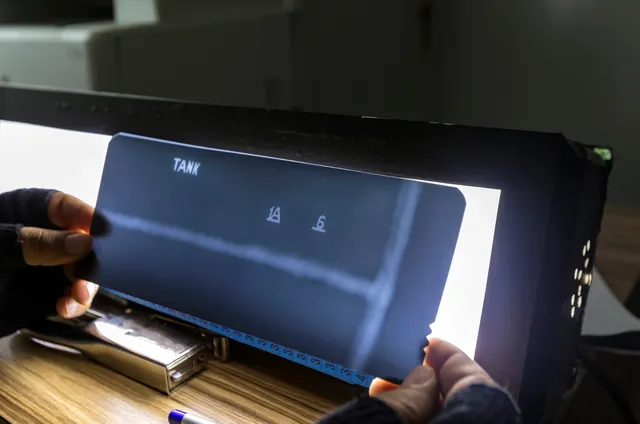
Industrial radiography works by exposing a test object to either electrically generated X-rays or gamma-rays radiation, which passes through the object to a recording medium (film), which is placed against the opposite side. The film is processed, viewed by qualified technicians who are able to detect defects and anomalies in accordance with applicable codes and standards.
For thinner or less dense materials like aluminum, electrically generated X-rays are commonly used. For thicker or denser materials, gamma radiation is usually used.
Gamma radiation is given off by decaying radioactive materials. The two most commonly used sources of gamma radiation are Iridium-192 and Cobalt-60. Iridium-192 or IR-192 is generally used for steel up to 2-1/2 – 3 inches, depending on the Curie strength of the source. Co-60 is usually used for thicker materials due to its greater penetrating ability.
The recording media can be an industrial x-ray film, or a radiation detector. With both, the radiation passes through the test object.
If there is a void or defect in the part, more radiation passes through, showing a darker image on the film or detector.
This allows a fabricator to look for defects and test the quality of work before it is shipped out.
Recent advancements in digital radiography, which does not require the use of expensive film and developing equipment, have allowed radiography to be considered for additional types of work including high volume manufacturing Quality Assurance.
What are the advantages of Radiographic Testing
Discontinuity Evaluation: Radiographic Testing (RT) can easily locate internal structural discontinuities using visual comparison with known geometric features of the test object.
Versatility: Radiographic Testing can be applied to most types of materials.
Volumetric Inspection: Radiographic Testing is considered by many to be the most universal approach to volumetric examination.
Clarity: Radiographic Testing inspections yield a visual rendition of internal voids and fabrication errors that is readily interpretable.
Records: Radiographic Testing inspections create a lasting record of the inspection. When image quality indicators (IQIs) are used, they show how sensitive the test was and produce a digital record of the test object for later viewing.
Sensitivity: Radiographic Testing can detect small changes in thickness and density, down to about 1%, along the path of the X-ray beam.
What are the disadvantages of Radiographic Testing
Expense: Radiographic Testing (RT) is a relatively expensive method of nondestructive testing.
Complex Geometries: It is impractical to use Radiographic Testing on specimens of complex geometry.
Defect Size: Very small defects can be hard or impossible to see. Small, isolated defects that are less than 2% of the total thickness are usually not detected.
Access: There must be access to both sides of the object being inspected.
Discontinuity Orientation: The way a defect is positioned in relation to the direction of the radiation beam is very important. Some defects, like thin layers, can be missed by radiography if they are perpendicular to the radiation path.
Training and Experience: Radiographic Testing requires highly trained and skilled personnel to perform inspections correctly and safely. This makes RT training and certification essential.
Safety: The radiation hazards in Radiographic Testing mean that operating licenses issued by state and federal agencies are required for inspectors.
Ultrasonic Testing
This ultrasonic testing method under non-destructive testing uses electrically generated sound waves to penetrate through an object to detect defects. Sonic reflection, refraction and absorption are then displayed and recorded on a video screen for interpretation.
Similar to naval sonar and medical ultrasound, industrial Ultrasonic Testing operates on the principle of sending sound waves into a material and analyzing the returned echoes to gather information about the internal structure of the test part.
This process requires significantly more skill and experience in order to provide accurate interpretations.
– Image courtesy of ASNT.org
How does Ultrasonic testing work?
Ultrasonic testing uses the same principle as Sonar.
An ultra-high frequency sound is introduced into the part being inspected. If the sound hits a material with a different acoustic velocity, some of the sound will reflect back, and is presented on a visual display.
By knowing the speed of the sound through the part, which is called the acoustic velocity, and the time required for the sound to return to the sending unit, the distance to the reflector can be determined.
The two most common types of sound waves used in industrial inspections are
the compression wave and
the shear wave.
Compression waves cause the atoms in a part to vibrate back and forth parallel to the sound direction and shear waves cause the atoms to vibrate perpendicularly to the direction of the sound. Shear waves travel at approximately half the speed of longitudinal waves.
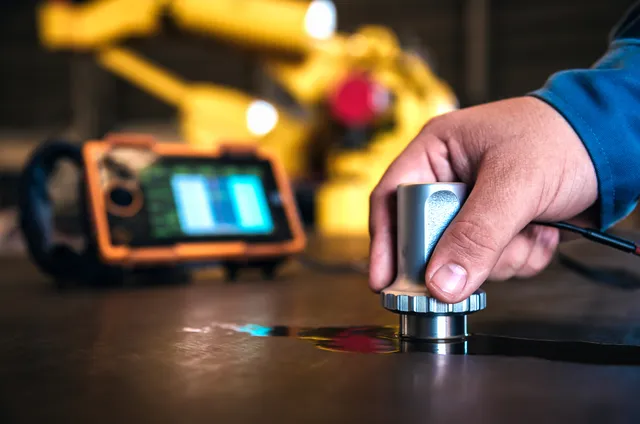
Sound is introduced into the part using an ultrasonic transducer that converts electrical impulses from the UT machine into sound waves. Then it converts returning sound back into electric impulses that can be displayed on an LCD or CRT screen.
When the machine is properly calibrated, the operator can determine the distance from the transducer to the reflector, and the operator can determine the type of discontinuity (like slag, porosity or cracks in a weld) that caused the reflector.
Because ultrasound will not travel through air, a liquid or gel is used between the face of the transducer and the surface of the part. This allows the sound to be transmitted into the part.
Industrial applications use Ultrasonic Testing to:
Measure Thickness: Ultrasonic Testing (UT) is commonly used to measure the thickness of a part by comparing the ultrasonic echoes from the front surface to the back surface.
Detect Internal Defects: By detecting the returned signal when a discontinuity interacts with the ultrasonic wave, Ultrasonic Testing helps identify and measure internal defects.
Measurement Stress: Ultrasonic Testing can be used for stress measurement, such as bolting stress measurement and residual stress measurement, which are unique applications of this method.
Ultrasonic testing is used in multiple applications such as quality control on welds and material in bridge and structural fabrication. Also used in quality control testing of welds in piping fabrication and installation.
What are the advantages of Ultrasonic Testing
Volumetric Inspection: Unlike surface-based methods like Liquid Penetrant Testing and Magnetic Particle Testing, Ultrasonic Testing can detect internal discontinuities.
Safety: Unlike Radiographic Testing, the ultrasonic waves used in Ultrasonic Testing are harmless to personnel in the testing area, eliminating radiation safety concerns.
Sensitivity: Ultrasonic Testing is highly sensitive to defects critical to structural integrity, particularly planar discontinuities.
Versatility: Ultrasonic Testing can detect surface, near-surface, and subsurface discontinuities, making it suitable for a wide range of applications.
Portability: Ultrasonic Testing equipment is portable, allowing for inspections in various environments and locations.
Discontinuity Evaluation: Advanced Ultrasonic Testing techniques can help inspectors determine the size and severity of discontinuities to support informed decision making.
What are the disadvantages of Ultrasonic Testing
Complex Geometries: Inspecting parts with irregular shapes or complex geometries can be challenging with Ultrasonic Testing.
Surface Preparation: Ultrasonic Testing generally requires good surface contact between the transducer and the material, calling for careful surface preparation.
Requires Couplant: A gel or liquid medium is required to provide an interface between the transducer and the material, which can be a logistical challenge in some situations.
Material Properties: Ultrasonic Testing may be less effective with materials that scatter or absorb sound such as concrete or stainless-steel castings or nonelastic materials such as rubber and soft plastics.
Discontinuity Orientation: Certain orientations of discontinuities may pose detection challenges and require testing with additional methods.
Training and Experience: Ultrasonic Testing requires a high level of expertise. Technicians need to be familiar with physics and confident in their ability to analyze data and interpret results. This makes UT training and certification essential.
Electromagnetic or Eddy-current testing
Eddy current testing is an Electromagnetic testing method.
The eddy current testing technique is used on non-magnetic and slightly magnetic materials such as brass, copper and stainless steel for crack detection, material thickness measurements, coating thickness measurements and conductivity measurements for material identification, heat damage detection, case depth determination, saddle wear, pitting, transverse cracking, freeze bulges, splits, dents, and heat treatment monitoring. This makes eddy current a useful tool for detecting corrosion damage and other damage that causes thinning of the material. The eddy current method is very good for surface and near surface defects, is sensitive to small cracks and other defects and requires very little part preparation. It is limited to use on conductive materials, with the surface accessible to the probe.
– Image courtesy of ASNT.org
How does Electromagnetic / Eddy current testing work?
In the Eddy current testing method an alternating current (AC) is applied to a coil, creating a varying electromagnetic field. Technicians place an eddy current probe, which can be a coil encircling the material or a handheld probe. It is moved across the surface, on the material so the electromagnetic field can penetrate the material directly.
The probe generates an alternating magnetic field, which creates eddy currents in the conductive material being inspected. These eddy currents create their own secondary magnetic field, which opposes the primary field generated by the probe.
The depth at which eddy currents penetrate a material depends on factors like frequency, conductivity, and permeability.
When eddy currents encounter a discontinuity, that is a material with different electrical conductivity or magnetic permeability, they are disrupted. This causes changes in the secondary magnetic field. By analyzing these changes, skilled operators can determine the presence and characteristics of discontinuities, such as cracks, corrosion, or inclusions.
There is another type of eddy current testing too. It is called Pulsed Eddy Current testing (PECT).
It uses a pulsed DC magnetic field to generate eddy currents.
In this method the decay of the eddy currents over time is measured to detect corrosion and other discontinuities.
PECT is effective for inspecting thick materials and detecting corrosion under insulation and suitable for testing through intermediate objects like insulation or concrete.
What are the advantages of Electromagnetic / Eddy Current Testing
Material Restrictions: ET is primarily effective for conductive materials, such as metals. It is not suitable for non-conductive materials like plastics, ceramics, or composites.
Surface Condition Sensitivity: ET results can be significantly affected by the surface condition of the test material. Rough surfaces, coatings, and surface contaminants can interfere with the accuracy of the test.
Limited Applicability for Certain Defects: ET may not be effective for detecting certain types of defects, such as very small cracks or defects in complex geometries. Other NDT methods may be more suitable for these applications. ET is also generally limited to detecting surface and near-surface defects, and it may not be effective for identifying deeper subsurface defects.
Complexity of Interpretation: The interpretation of ET signals can be complex and requires skilled and experienced personnel. Variations in material properties, geometry, and other factors can produce signals that are difficult to interpret.
Sensitivity to Noise: ET is sensitive to electromagnetic noise and interference from the environment, which can affect the accuracy and reliability of the test results. Proper shielding and filtering are necessary to minimize these effects.
Equipment Complexity and Cost: Advanced ET systems can be complex and expensive, requiring significant investment in equipment and training. Maintenance and troubleshooting of sophisticated ET equipment can also be challenging.
Visual Testing
Visual testing is the most commonly used NDT method across all industries. As the first line of inspection, it allows for a feasible and fast control of quality at every step of the fabrication or maintenance process.
It is quick, cost-effective, and provides real-time results, making it an essential NDT method across multiple industries.
Visual Testing (VT) is used to detect visible flaws such as deformation, welding defects and corrosion. Many tools can be used during the inspection such as a ruler, borescopes, magnifiers, mirrors, gauges, cameras, etc.
– Image courtesy of ASNT.org
Advantages:
Reduction in repair costs because of constant monitoring at every step of fabrication;
Understanding of different degradation phenomena;
Documentation of the observations using measurement tools;
Very cost efficient and quick QC/QA technique.
How does Visual Testing work?
It broadly follows four steps
Surface preparation
Clean the surface to remove any contaminants that could obscure defects.
Inspection
Use appropriate lighting and optical aids to examine the surface.
Visual testing (VT) depends largely on the vision and perception of the technician performing the inspection. Utilizing light and angles helps NDT technicians to observe and identify potential flaws. When carrying out Visual Testing, understanding the surface they are working on and how their ability to view the area of interest influences the accuracy of the inspection.
Evaluation
Identify and assess any discontinuities based on established criteria
Reporting
Document the findings, including any discrepancies or defects identified.
What are the advantages of Visual Testing
Simplicity and Accessibility: Visual Testing (VT) is one of the most straightforward NDT methods, requiring minimal equipment, and concepts are easily understood and applied by inspectors.
Cost-Effectiveness: Since Visual Testing often requires only basic tools, it is generally less expensive than other NDT methods that require sophisticated and costly equipment.
Immediate Results: Visual Testing provides real-time results, allowing inspectors to quickly identify and assess surface anomalies. This immediacy can be crucial for making timely decisions regarding maintenance and repairs.
Non-Invasive: VT is a non-invasive method that does not alter or damage the test object. This makes it suitable for inspecting critical components where maintaining the integrity of the material is essential.
Versatility: Visual Testing can be applied to a wide range of materials and components across various industries, including aerospace, automotive, construction, and nuclear power. It is effective for both direct and remote inspections.
What are the disadvantages of Visual Testing
Discontinuity Detection: Visual Testing can only detect surface-level. Identifying subsurface flaws may require other NDT methods such as Ultrasonic Testing (UT) or Radiographic Testing (RT).
Line of Sight Requirement: Effective Visual Testing requires a direct line of sight to the area being inspected. This can be challenging for components with complex shapes or those located in hard-to-reach areas.
Subjectivity: The effectiveness of Visual Testing depends on the skill and experience of the inspector. Inadequate training or experience can result in incorrect assessments.
Environment: Adverse conditions, such as radiation, extreme temperatures, or underwater locations, can complicate the Visual Testing process and require specialized equipment.
Preparation: The test object may need cleaning or surface preparation to remove materials that could obscure defects, potentially adding time to the inspection process.
Additional NDT Methods
These specialized techniques cater to specific applications and materials, providing further capabilities for comprehensive inspection and analysis and ensuring that even the most challenging defects can be detected and evaluated:
Acoustic Emission (AE):
Monitors the release of energy from a material under stress, detecting the formation and growth of cracks. It is used in structural health monitoring and failure analysis.
Infrared Testing (IR):
Uses thermal imaging to detect heat patterns and anomalies in materials and components. It is widely used for electrical inspections, building diagnostics, and mechanical systems.
Ground Penetrating Radar (GPR):
Uses radar pulses to image the subsurface of materials. It is commonly used in geotechnical investigations, archaeology, and utility detection.
Guided Wave Testing (GW):
Uses low-frequency ultrasonic waves that travel along the length of a structure, such as a pipeline, to detect defects over long distances.
Laser Methods (LM):
Use laser technology for precise measurements and inspections. Applications include laser shearography, laser profilometry, and laser ultrasonic testing.
Leak Testing (LT):
Involves various methods to detect and locate leaks in pressurized systems. Techniques include pressure decay, bubble testing, and tracer gas methods.
Magnetic Flux Leakage (MFL):
Detects corrosion and pitting in steel structures by magnetizing the material and measuring the leakage field caused by discontinuities. It is commonly used in pipeline and tank inspections.
Microwave Testing (MW):
Uses microwave frequencies to detect changes in the material properties of a component. It is often used in the inspection of dielectric materials and composites.
Neutron Radiography (NR):
Similar to radiographic testing but uses neutrons instead of X-rays or gamma rays. It is particularly useful for inspecting materials that are difficult to penetrate with traditional radiography, such as thick metals and certain composites.
Vibration Analysis (VA):
Monitors the vibration characteristics of machinery and structures to detect imbalances, misalignments, or other mechanical issues. It is commonly used in predictive maintenance.
How infraMOD can help with non-destructive testing
infraMOD has over 35 years of experience providing superior steel fabrication solutions achieved by combining project analysis, stakeholder communications and design innovation for modularization. We have acquired strong product knowledge and are leaders in excavation support specializing in earth retention solutions like bracing and shoring. Our knowledge and capabilities help us advise clients on the best testing methods to use keeping in mind requirements of the project. Based on consultations and client needs we are able to provide solutions that are cutomised and save our customers money.
Non-destructive testing (NDT), also known as non-destructive examination (NDE), is a testing methodology used to evaluate the quality, integrity, and reliability of materials, welds, and components without causing damage to the product. Unlike destructive testing, NDT does not harm the test object, making it a cost-effective way to ensure products meet required codes and standards.
The most common types of non-destructive testing include:
Liquid Penetrant Testing (LPT)
Magnetic Particle Testing (MT)
Ultrasonic Testing (UT)
Radiographic Testing (RT)
Electromagnetic / Eddy Current Testing (ET)
Visual Testing (VT)
Some methods, such as Ultrasonic and Radiographic Testing, are considered volumetric because they detect internal defects. Others, like Liquid Penetrant, Magnetic Particle, and Visual Testing, are surface-level inspection methods.
Liquid Penetrant Testing (LPT) is a surface inspection method used to detect discontinuities that are open to the surface in both ferrous and non-ferrous materials. A low-viscosity liquid penetrant is applied to the surface, where it seeps into cracks or voids. After excess penetrant is removed and a developer is applied, trapped penetrant resurfaces, creating visible indications of defects.
LPT is commonly used for inspecting welds and structural components in infrastructure projects.
Liquid Penetrant Testing (LPT) is effective for surface inspection, but it has several important limitations:
Surface-only detection – Can only identify defects open to the surface; subsurface flaws cannot be detected.
Not suitable for porous materials – Penetrant can seep into the base material and create misleading indications.
Strict surface preparation required – Surfaces must be thoroughly cleaned before and after inspection.
Environmental sensitivity – High temperatures and wind can affect penetrant application and performance.
Health & safety considerations – Some penetrants, emulsifiers, and developers may cause skin irritation and require proper PPE and disposal procedures.
Magnetic Particle Testing (MT) is a method used to detect surface and near-surface discontinuities in ferromagnetic materials such as iron, nickel, cobalt, and their alloys. A magnetic field is applied to the component, and magnetic particles are introduced. These particles gather at disruptions in the magnetic field caused by cracks or defects, forming visible indications.
Radiographic Testing (RT), also known as industrial radiography, uses X-rays or gamma rays to examine the internal structure of a component. Radiation passes through the object onto a film or detector, creating an image that reveals internal discontinuities such as voids or fabrication defects.
It is widely used because of its ability to detect subsurface flaws that could lead to component failure.
Ultrasonic Testing (UT) uses high-frequency sound waves to detect internal defects within a material. Sound waves are transmitted into the object, and reflected signals are analyzed to determine the presence, location, and size of discontinuities.
UT is commonly used in weld quality control, piping fabrication, and structural applications.
Ultrasonic Testing (UT) is highly capable but technically demanding:
Challenging for complex shapes – Irregular geometries can complicate inspection.
Requires good surface contact – Careful preparation is needed for accurate results.
Needs a couplant – Gel or liquid is required because ultrasound does not travel through air.
Material limitations – Less effective on materials that scatter or absorb sound (e.g., concrete, some castings) and nonelastic materials like rubber and soft plastics.
Orientation sensitivity – Certain defect alignments may require additional testing methods.
High training requirement – Accurate interpretation demands significant expertise.
Eddy Current Testing (ET) is an electromagnetic testing method used primarily on conductive materials such as brass, copper, and stainless steel. An alternating current generates an electromagnetic field that induces eddy currents in the material. Disruptions in these currents indicate cracks, corrosion, or other defects.
It is particularly useful for detecting surface and near-surface defects and measuring material thickness.
Visual Testing (VT) is the most commonly used NDT method and often serves as the first line of inspection. It involves examining a component with the naked eye or optical tools such as magnifiers, borescopes, mirrors, or cameras to identify visible defects like deformation, corrosion, or welding flaws.
Most NDT methods are safe when performed correctly. Methods such as Ultrasonic Testing do not pose radiation hazards. However, Radiographic Testing involves ionizing radiation and requires proper licensing, training, and safety precautions to protect personnel.
Non-destructive testing is essential for ensuring the quality, integrity, and reliability of weldments and structural components without damaging them. It helps detect defects before products are placed into service, ensures compliance with applicable codes and standards, and provides customers with documented assurance that their product meets design requirements.
Non-destructive testing (NDT) or non-destructive evaluation (NDE) is used in manufacturing, fabrication and in-service inspections to ensure product integrity and reliability, to control manufacturing processes, lower production costs and maintain quality.
NDT and NDE are forms of testing or evaluating fabricated components that do not destruct, destroy or affect the serviceability of the component. Discontinuities and differences in material characteristics are more effectively found by NDT.
NDT and NDE play a critical function within the Construction and Manufacturing Industries in Canada and around the world.
In this blog, we’ll discuss four main types of NDT/NDE – Liquid Penetrant Inspection, Magnetic Particle Testing, Radiographic Testing and Ultrasonic Testing.
Introduction
There are many different forms of NDT/NDE. Some are considered volumetric, and others are categorized as surface only. Visual Testing, Magnetic Particle and Liquid Penetrant Inspections are surface only, whereas Ultrasonic and Radiographic are considered volumetric, meaning that they are able to “look” inside the component to find defects that would not be visible without cutting into the component.
Depending on which code or standard a fabrication is built and welded to, there are different acceptance and rejection criteria for the different NDE disciplines.
At Saskarc, we regularly perform Magnetic Particle, Liquid Penetrant, Ultrasonic and Radiographic Inspections. Some of these disciplines can be performed in-house, pro-actively, but all disciplines require a third party to come in and perform the testing and provide the reports.
Ultimately, NDT/NDE is a way of confirming the quality, integrity and reliability of a weldment without doing any harm to the end product. The NDT/NDE reports give our customer’s the satisfaction that their product is up the code or standard it was designed to.
Here a deeper look at some of the most common types of NDT/NDE:
Liquid Penetrant Inspection pictured above is performed with a liquid with low viscosity called a penetrant which is applied to the surface of a part It then will penetrate into fissures and open to the surface Once the excess penetrant is removed the penetrant trapped in those voids will creep back out through capillary action creating an indication
Liquid Penetrant Inspection
The basic principle of Liquid Penetrant Inspection (LPI) is that when a liquid with low viscosity – called a penetrant, is applied to the surface of a part, it will penetrate into fissures and open to the surface.
Once the excess penetrant is removed, the penetrant trapped in those voids will creep back out through capillary action, creating an indication.
Penetrant testing can be performed on magnetic and non-magnetic materials, but it doesn’t work well on porous materials. Penetrants may be “visible”, meaning they can be seen in ambient light, or fluorescent, requiring the use of a “black” light.
After applying the penetrant, it sits on the surface for a specified period of time, coined as the “penetrant dwell time”, then the part is carefully cleaned to remove excess penetrant from the surface. A light coating of developer is then applied to the surface and given time to allow the penetrant from any voids or fissures to seep up into the developer, creating a visible indication.
Following the developer dwell time, the part is inspected visually, with the aid of a black light when using fluorescent penetrants. Most developers are fine-grained, white talcum-like powders that provide a color contrast to the penetrant being used.
Magnetic Particle Testing
Magnetic Particle Testing uses magnetic fields to locate surface and near-surface discontinuities in ferromagnetic materials. Any defects found are measured against standards such as CSA W59 and ASME B31.3, to name a few.
The magnetic field can be applied with a permanent magnet, electromagnet or by running a current through the component. The magnetic field can be orientated circularly or longitudinally. Circular magnetic fields are generated by passing a current through a conductor surrounded by the component. A longitudinal magnetic field is produced when using a coil, permanent magnet or electromagnet.
An orientation of 45 to 90 degrees between the magnetic field and the defect is necessary to form an indication. When this happens, the flux lines produce a magnetic leakage. Because magnetic flux lines don’t travel well in air, when very fine colored magnetic particles are applied to the surface of the part the particles will be drawn into the discontinuity. This reduces the air gap, and produces a visible indication on the surface of the part.
The magnetic particles can be a dry powder, or suspended in a liquid solution, and they may be colored with a visible dye or a fluorescent dye that fluoresces under an ultraviolet light.
Radiographic Testing
Industrial radiography works by exposing a test object to radiation, which passes through the object to a recording medium, which is placed against the opposite side.
For thinner or less dense materials like aluminum, electrically generated X-rays are commonly used. For thicker or denser materials, gamma radiation is usually used.
Gamma radiation is given off by decaying radioactive materials. The two most commonly used sources of gamma radiation are Iridium-192 and Cobalt-60. Iridium-192 or IR-192 is generally used for steel up to 2-1/2 – 3 inches, depending on the Curie strength of the source. Co-60 is usually used for thicker materials due to its greater penetrating ability.
The recording media can be an industrial x-ray film, or a radiation detector. With both, the radiation passes through the test object.
If there is a void or defect in the part, more radiation passes through, showing a darker image on the film or detector.
This allows a fabricator to look for defects and test the quality of work before it is shipped out.
Ultrasonic Testing
Ultrasonic testing uses the same principle as Sonar. An ultra-high frequency sound is introduced into the part being inspected. If the sound hits a material with a different acoustic velocity, some of the sound will reflect back, and is presented on a visual display.
By knowing the speed of the sound through the part, which is called the acoustic velocity, and the time required for the sound to return to the sending unit, the distance to the reflector can be determined.
The two most common types of sound waves used in industrial inspections are the compression wave and the shear wave.
Compression waves cause the atoms in a part to vibrate back and forth parallel to the sound direction and shear waves cause the atoms to vibrate perpendicularly to the direction of the sound. Shear waves travel at approximately half the speed of longitudinal waves.
Sound is introduced into the part using an ultrasonic transducer that converts electrical impulses from the UT machine into sound waves. Then it converts returning sound back into electric impulses that can be displayed on an LCD or CRT screen.
When the machine is properly calibrated, the operator can determine the distance from the transducer to the reflector, and the operator can determine the type of discontinuity (like slag, porosity or cracks in a weld) that caused the reflector.
Because ultrasound will not travel through air, a liquid or gel is used between the face of the transducer and the surface of the part. This allows the sound to be transmitted into the part.
Saskarc has over 25 years of experience providing superior steel fabrication solutions achieved by combining project analysis, stakeholder communications and design innovation for modularization. See what our customers have to say about working with us and contact us today to learn more about how we can make your fabrication project a success by utilizing modularization.