Steel is used in fabrication projects primarily for its durability and strength. Steel is a tensile metal, meaning that it has a high strength-to-weight ratio, making it easy to work with. Since steel is highly versatile, it’s often coated with other products to create the final fabrication product.
Sometimes these coatings serve practical purposes, such as adding integrity or protection to structures, and other times is used for aesthetic purposes.
There are many different finishing to choose from when it comes to steel structures. In this blog, we’ll discuss the pros and cons of the most common coatings: bare, painted, or galvanized steel.
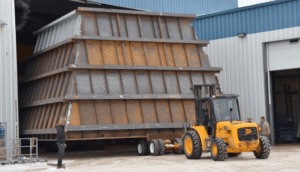
This Flue Gas Casing, pictured above, is an example of a project where bare steel was used.
Bare steel
Steel on its own is extremely strong and durable, making it a good choice for fabrication projects. Bare steel is one of the most basic steels found in fabrication projects. Bare steel is typically chosen as an option when no other coatings are necessary to the project’s integrity or aesthetic value.
The pros of bare steel include:
- Cost-effective – opting for bare steel instead of paint or galvanization is less expensive
- Bare steel is lighter than galvanized steel, which may be beneficial in some cases.
Some of the cons that come along with bare steel can include:
- Steel that is not galvanized or painted is more likely to be affected by corrosion and rust, reducing its lifespan
- The colour is a splotchy dull grey or orange, giving less of an aesthetic element.
What is bare steel used in?
Bare steel can be used in a variety of projects, including:
- Structural components
- Interior parts and components
- Conveyor trusses and galleries
- Ducting
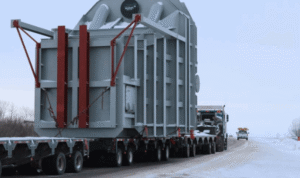
These Pump Boxes, pictured above, feature painted steel.
Painted Steel
Steel is painted for a variety of purposes, generally using a 1, 2 or 3 coat system of epoxy, zinc or polyurethane paint. The type of paint product and the number of coats is dependent on a number of reasons/factors, such as site conditions where the finished steel is going, expected lifespan of the steel and aesthetic appearance. Painting steel to specified colour schemes can add company or project specific branding to a steel fabrication project if desired.
Some of the pros of painted steel are:
- It can add an aesthetic element to your design, if desired
- It can significantly increase the lifespan of the steel
- Flexible application options – paint can be applied in the field or factory
- Custom colour options.
Some of the cons of choosing painted steel are:
- A touch-up may be required as the paint fades over time
- Cost of the paint and its application
- With an epoxy paint, paint can fade unevenly depending on where the parts of a structure may face – i.e., one section of a structure may be exposed to more sun than another section, causing an uneven fade over time. However, typically outdoor structures have a UV resistant topcoat to prevent this from happening
Some examples of where you can see painted steel include:
- Tanks
- Pump boxes
- Access steel such as ladders, platforms and hand rails.
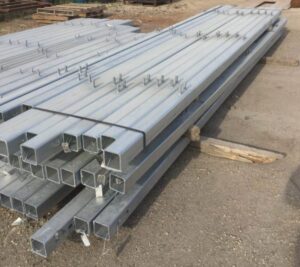
These Guardrails, pictured above, are galvanized steel used at a large Hydro Power Generation Station.
Galvanized Steel
Galvanizing is the process of applying a protective zinc coating to prevent rusting. The most common method is hot-dip galvanizing, where the steel parts are submerged in a bath of molten zinc. At most fabrication companies, a sub-contractor is responsible for this highly-specialized job. Customers typically opt for galvanized steel when they need to maximize the integrity of a project and cost is not an issue.
There are many pros of galvanized steel:
- Galvanizing steel helps protect it from red rust
- It can also help to strengthen the integrity of the steel
- When steel undergoes galvanization, structures can benefit from a higher resistance to scratches
As with any kind of steel finishing, galvanized steel has its cons, which include:
- There can be a high cost associated with galvanization, especially in large-scale projects. This may not make it feasible for some projects where budget is a large determining factor
- Although resistant to red rust, galvanized steel can develop white rust over time if exposed to moisture
Examples of projects that commonly use galvanized steel include:
- Bridges
- Steel components in chemical plants
- Guard rails.
No matter the needs of your steel structure project, our experts at Saskarc can help you determine which coating, or lack thereof, is appropriate for your needs.
Saskarc analyzes every project to define the critical requirements that will maximize success. We continuously invest in our people, equipment, and facilities to provide our customer with the best service, support, and innovative solutions to meet their requirements.
Our strict attention to material selection, joining specifications and inspection procedures ensures that we deliver on the highest quality projects.
Saskarc is entirely committed to quality, customer service and on-time delivery, however NEVER at the expense of our commitment to safety.
Due to the versatility of Saskarc’s custom steel fabrication capabilities and project management expertise, we are equipped to fabricate and assemble oversized modules limited only by transportation regulations. When it comes to large projects, Saskarc is your turnkey professional fabrication solution. Read what our customers have to say about working with us.