
Major infrastructure projects that rely on temporary steel supports are complex undertakings. They involve tight schedules, multiple stakeholders, and coordination across a range of moving parts.
In the end, however, the primary goal is the same as for any project: deliver a safe, reliable solution on time and within budget.
With projects often taking place in busy urban environments or logistically challenging locations, careful planning is critical. What does it take to avoid costly delays, incidents, and budget overruns?
More importantly, how can you strategically plan your temporary steel project to achieve faster installation, lower crane time, and a reduced total installed cost?
Off-site Modularization
Off-site modular fabrication, or modularization, is one of the most effective strategies to lower the total installed cost of temporary steel on an infrastructure project. Instead of assembling every piece on-site, large components, such as walers, struts, or traffic decking, are fabricated off-site and delivered ready for installation.
Through off-site modularization, total installed costs can be reduced by the following:
- Reduced rental costs – such as for cranes, site support equipment, worker facilities
- Reduced staging and laydown requirements
- Fewer risks of schedule delays that drive up costs
By moving more work into a controlled shop environment, crews spend less time dealing with site restrictions, weather, or congestion. This means safer, faster installations and fewer budget surprises.
And modularization doesn’t have to start at day one. Even if a project is already underway, there are often opportunities to adapt. Existing drawings and plans can be reviewed to uncover ways to shift certain components to off-site fabrication and still capture time and cost savings.
Early Contractor Involvement
It’s not unusual for large-scale construction projects to experience schedule delays and/or cost overruns. But why?
While increased project costs might be attributed to on-site conditions or unexpected requirements, the true causes are often due to poor communications between the parties involved.
And the larger the project, the more ineffective communication becomes a factor in added time and costs.
In the design/build industries, good communication is often a challenge among the owner/customer, engineer/designer, and fabricator/contractor.
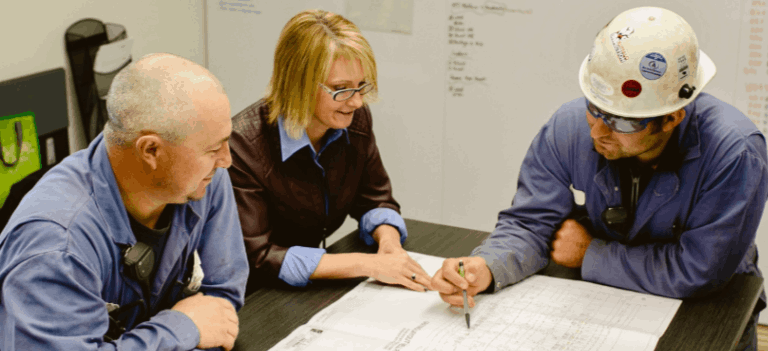
Large and complex Support of Excavation (SOE) projects need a more dynamic communications process – with all stakeholders contributing throughout the project, called Early Contractor Involvement (ECI).
Effective communication takes advantage of those different perspectives and experiences of all parties involved to plan a more integrated strategy. ECI essentially leverages this idea of effective communication and collaboration to improve a project’s design and management.
It is through this early communication and collaboration that total installed costs can be reduced by strategically planning from the beginning in a way that is cost-effective, and avoiding costly errors and re-work.
Setting a challenge to collectively find the most efficient strategies – to save time, risks and costs – can help everyone work towards successful outcomes.
Each partner can offer a wealth of insights from past projects, as well as ideas for innovative approaches to achieve the shared goal of reducing total installed costs.
By leveraging both off-site modularization and ECI as dual strategy approaches, the total installed cost of your temporary steel project can be controlled, and thus reduced.
At Saskarc, we believe in a thorough discovery process to gather information. To that end, open communications early in a project’s development lets us ask the right questions and offer our perspective and expertise as an experienced steel fabricator of temporary modular components.
We understand how our involvement in the beginning stages of a large-scale SOE project contributes to better collaboration, cost-savings, and overall success.
Saskarc can begin working with project owners early, to help assess the use of modularization strategies within the scope of large projects. When given an opportunity to examine feasibility from the start, our expert evaluations often uncover substantial savings to improve the return-on-investment for our customers.
Saskarc has over 30 years of experience providing superior steel fabrication solutions achieved by combining project analysis, stakeholder communications, and design innovation for modularization. See what our customers have to say about working with us and contact us today to learn more about how we can make your temporary steel project a success by utilizing modularization.