
What Is Modular Construction, and Why Is It Gaining Momentum?
In simple terms, modular construction means building key components away from the final job site, then delivering them ready for installation. Instead of completing every weld, fit-up, and assembly step in the field, most of the work happens in our controlled fabrication environment before the components are shipped to site.
Major construction projects have always required careful coordination, but today’s infrastructure market is facing a new level of pressure. Schedules are tighter, job sites are more congested, skilled labour is in high demand, and contractors are expected to deliver safer and faster results.
That is where modular construction continues to gain momentum.
For large infrastructure projects, this approach can make a huge difference. It reduces the amount of work required in high-risk, high-traffic, or space-limited environments and gives project teams more control over schedule, quality, risk, and logistics.
What Does Modular Construction Mean?
When most people hear the term “modular construction,” they may think of prefabricated buildings or repeatable room units. While that is one example, the same principle applies across many areas of construction.
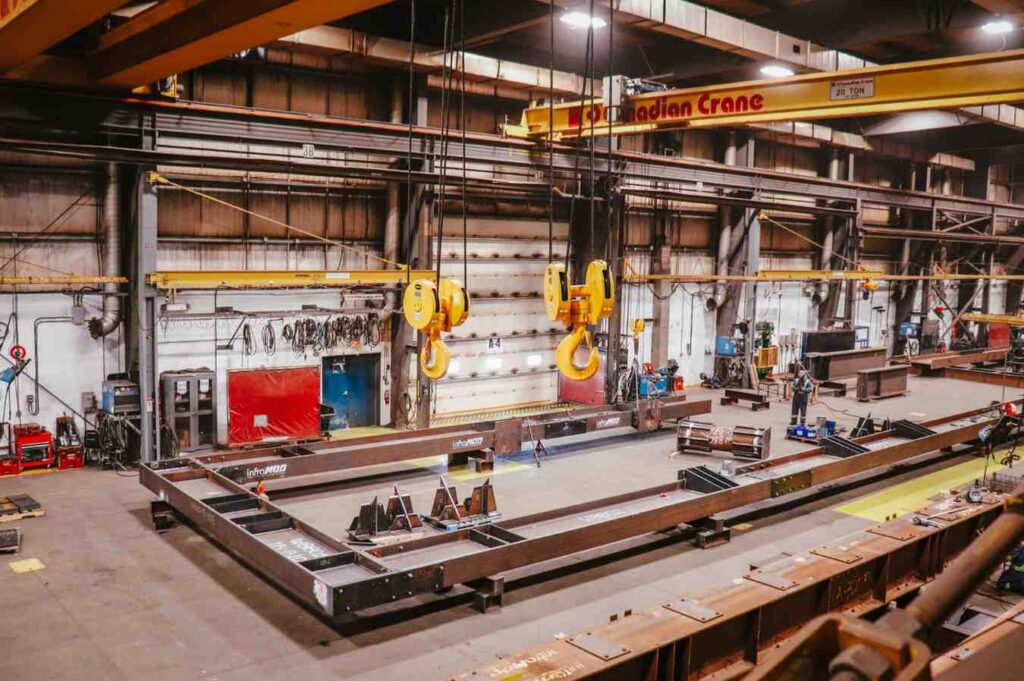
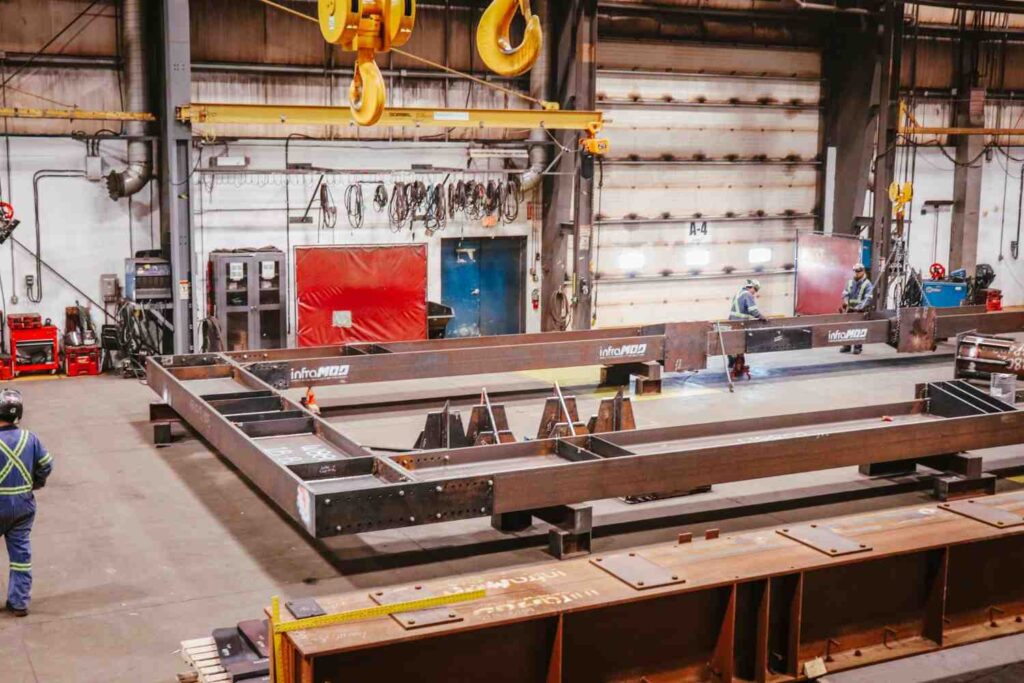
Modular construction is about shifting work away from the field and into a more controlled setting. Components are designed, fabricated, assembled, inspected, staged, and sometimes test-assembled before they are transported to site. Once delivered, they can be installed with fewer field adjustments and much less on-site rework or welding.
In support of excavation (SOE) work, modular construction can include prefabricated walers, struts, and temporary traffic & equipment decking – often alongside ground anchor components – that are designed to fit together efficiently on site. These are not simply standard products pulled from a shelf. They are engineered systems developed for specific project conditions, site constraints, installation sequencing, and performance requirements.
Off-Site Work vs. On-Site Work
Traditional construction often relies heavily on field assembly. Materials arrive on site, crews complete fit-up, welding, adjustments, inspections, and installation at the time, often while navigating challenging constraints like weather, access restrictions, traffic, equipment availability, and other trades working in the same space.
That approach can work, but it introduces a lot of variables and often results in significant delays.
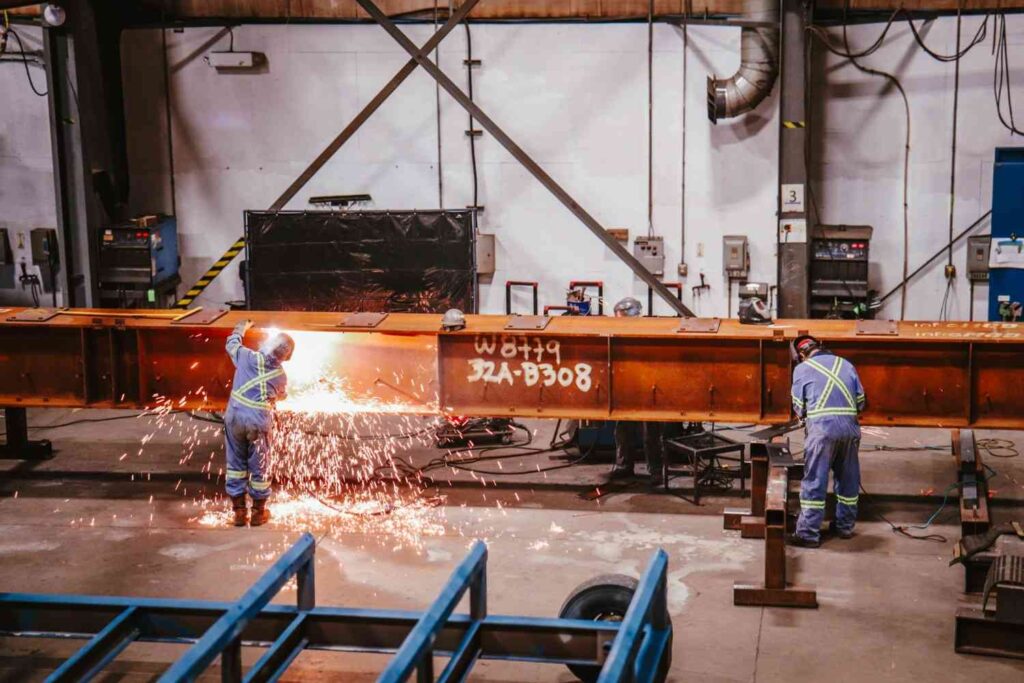
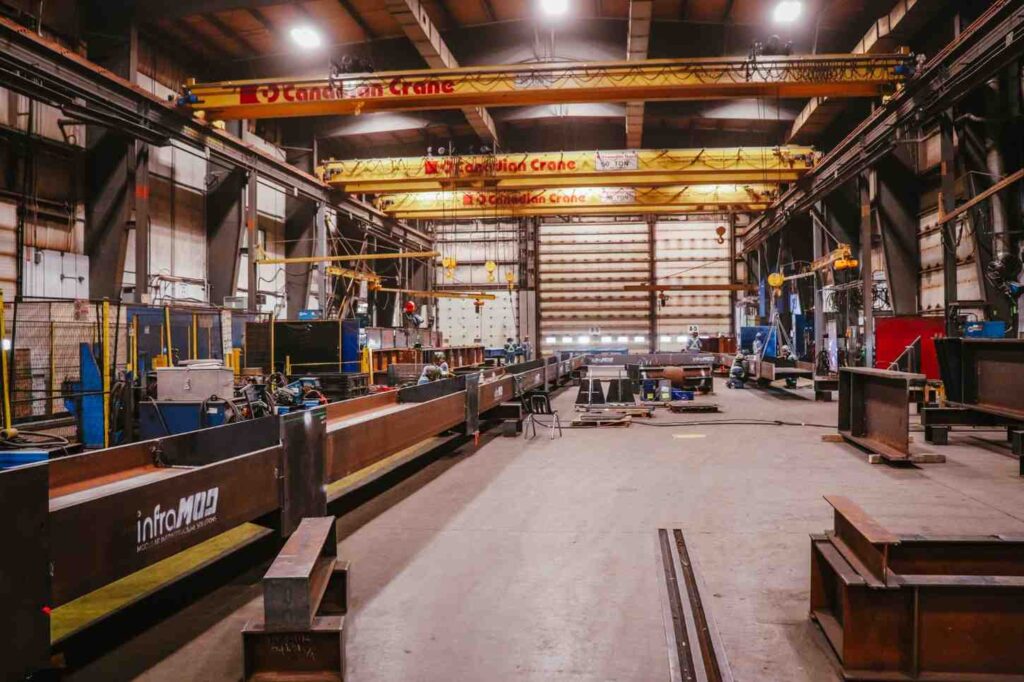
Off-site modular fabrication changes the sequence. The majority of the work is completed in advance at our fabrication facility, where our experienced team has access to the right equipment, controlled workflows, quality processes, and space for trial assembly. Components can be thoroughly inspected before shipping, then shipped to the project location for just-in-time delivery.
For infrastructure projects in dense urban environments, that difference matters. A downtown excavation site may have very little room for laydown, limited crane access, strict delivery windows, and ongoing public traffic nearby. Every hour spent cutting, welding, adjusting, or reworking in the field can affect the critical path.
By moving more of that work off-site, contractors can reduce site congestion and keep field crews focused on installation, significantly improving project schedules and minimizing risk.
Why Modular Construction Is Gaining Momentum
Modular construction is not new, but it has become more relevant as project teams look for ways to improve productivity and reduce risk. Industry research continues to point to modular delivery as a way to address common construction challenges, including slow productivity growth, labour shortages, schedule pressure, and the need for more controlled building methods.
One of the biggest advantages is speed.
When components are fabricated and assembled off-site, the site team can often install them much faster than if they were building the same system from individual pieces in the field. Work that may have taken weeks can be reduced to a matter of days when modular systems arrive ready to install.
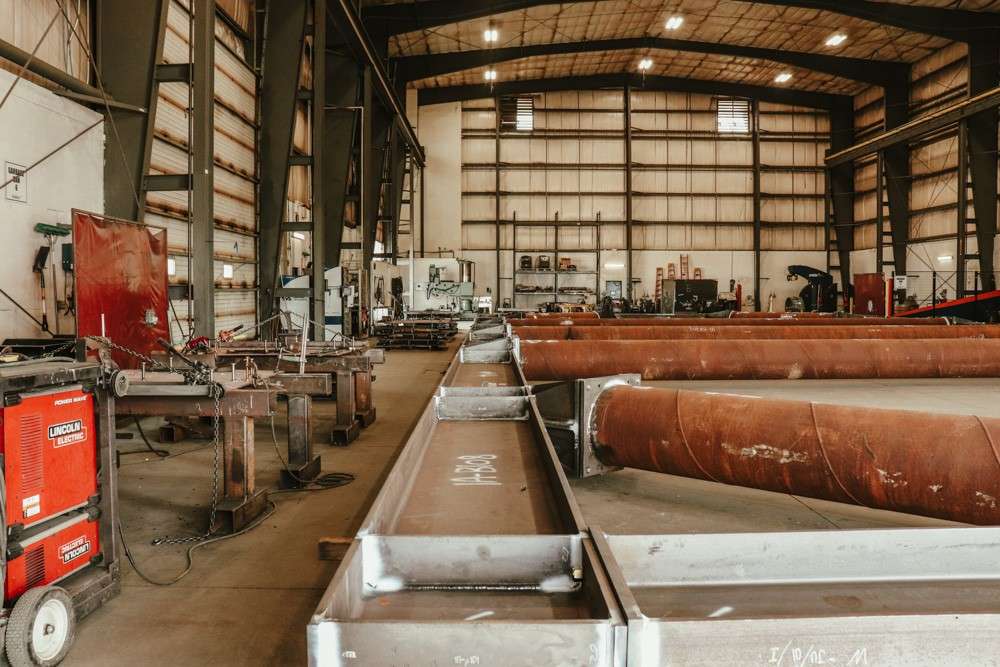
Modular construction also improves consistency. In a fabrication facility, teams are working in a controlled shop environment with established processes, specialized equipment, and repeatable quality checks. This helps reduce variability and lowers the chance of fit-up issues once the system reaches site.
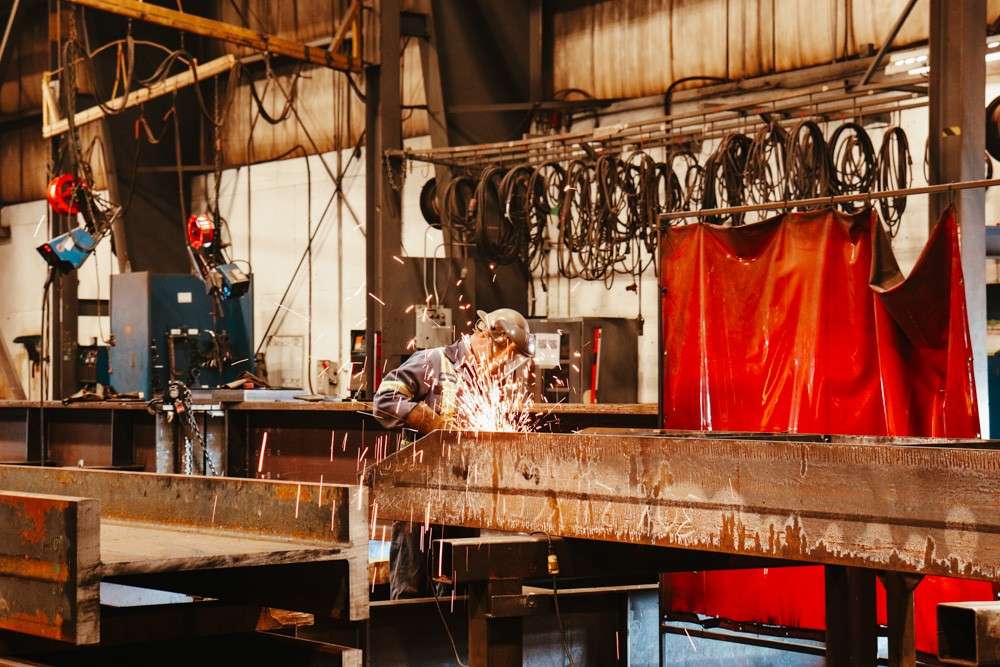
Safety is another important factor. Field construction often requires crews to work around open excavations, heavy equipment, weather, traffic, and limited space. By completing more work in a controlled shop environment, project teams can greatly reduce the amount of high-risk work that needs to happen on site.
There are also major logistics benefits. Less on-site assembly means reduced laydown requirements, fewer deliveries of untimely components, less congestion, and better coordination with crane and installation sequencing. For projects where space is limited, that can be just as valuable as the fabrication itself.
Where Steel Fabrication Fits into Modular Delivery
Steel fabrication is a critical part of modular construction, especially on large infrastructure and support of excavation projects.
For temporary steel systems, success depends on more than producing individual components. The systems need to be engineered for constructability, fabricated accurately, trial assembled when required, staged properly, and delivered in a sequence that supports the site schedule.
At infraMOD, modular delivery is built around that full process. Our team designs, fabricates, tests, stages, and delivers steel solutions such as ground anchoring systems, modular walers & struts, and modular traffic & equipment decking for complex excavation projects.
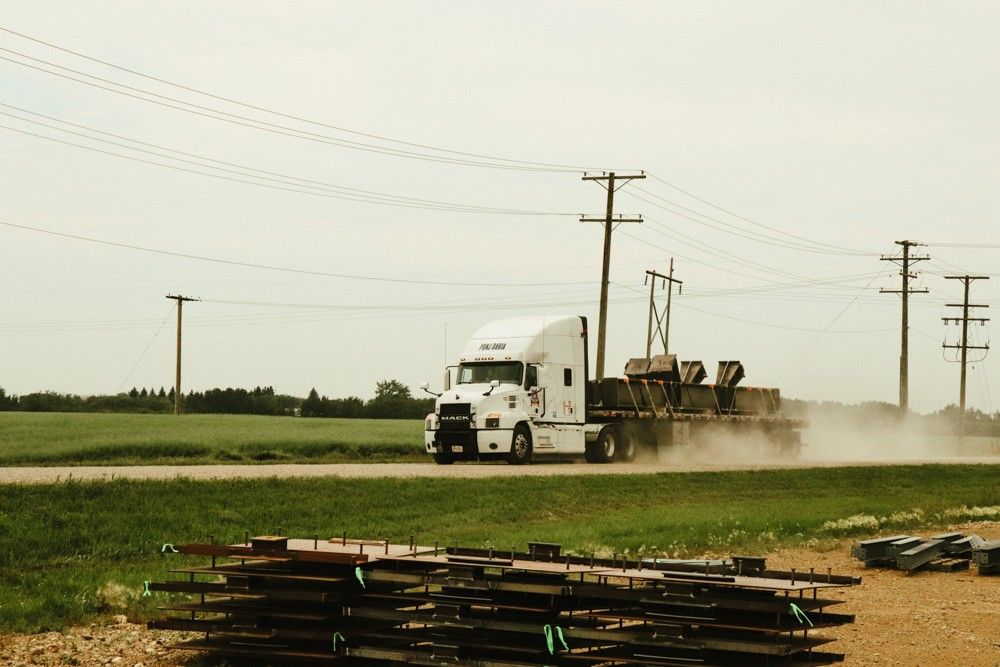
Our facilities support this approach at scale. With over 100,000 square feet of fabrication floor space and 25+ acres of graveled laydown area, infraMOD has the space to pre-assemble, stage, store, and coordinate just-in-time deliveries for large infrastructure projects. That capacity allows major steel systems to be prepared off-site, reducing pressure on the job site and helping contractors keep work moving.
The controlled fabrication environment also allows for detailed quality checks before components ship. This is especially important when working with large assemblies, tight tolerances, and complex installation conditions.
Modular Construction in Action: Ontario Line
The Ontario Line is a strong example of how modular construction can improve project outcomes.
As one of Canada’s largest transit infrastructure projects, the Ontario Line includes nearly 16 kilometers of transit expansion and 15 new stations. infraMOD was awarded contracts to design, fabricate, and install modular decking and bracing systems across key locations, including Exhibition Portal, King Bathurst, Queen Spadina, Osgoode, Queen, Moss Park, Corktown, Pape, and Sammon.
At these locations, the work required deep excavations supported by temporary waler and strut systems. The project conditions were complex: limited site access, heavy components, dense urban surroundings, tight timelines, and installation requirements that could directly affect the permanent works.
By applying the infraMOD™ methodology, welded field connections were converted to bolted connections where possible, improving constructability and reducing the need for cutting and welding on site. Major waler and strut systems were trial assembled at infraMOD’s fabrication facility before shipping, helping confirm proper fit-up and reduce uncertainty during installation.
The results were significant. On the Ontario Line stations supported by infraMOD™ solutions, installation timelines were shortened from weeks to days, including assemblies with systems weighing more than 35 metric tonnes. At King Bathurst and Queen Spadina, modular assemblies arrived on site ready to install, with some struts installed in three to four hours and entire assemblies installed the same day they were delivered.
At the Queen Spadina North Station, client-verified results showed a total reduction of 74 shifts, creating a net field savings of $1.11 million for that excavation alone.
That is the value of modular construction in practice. It is not just about prefabrication. It is about reducing risk, improving project schedules, and helping major infrastructure work progress safely and efficiently.
74
Shifts reduced at Queen Spadina North Station
one excavation
35+ MT
Assemblies installed
same-day
Modularity as a Strategy
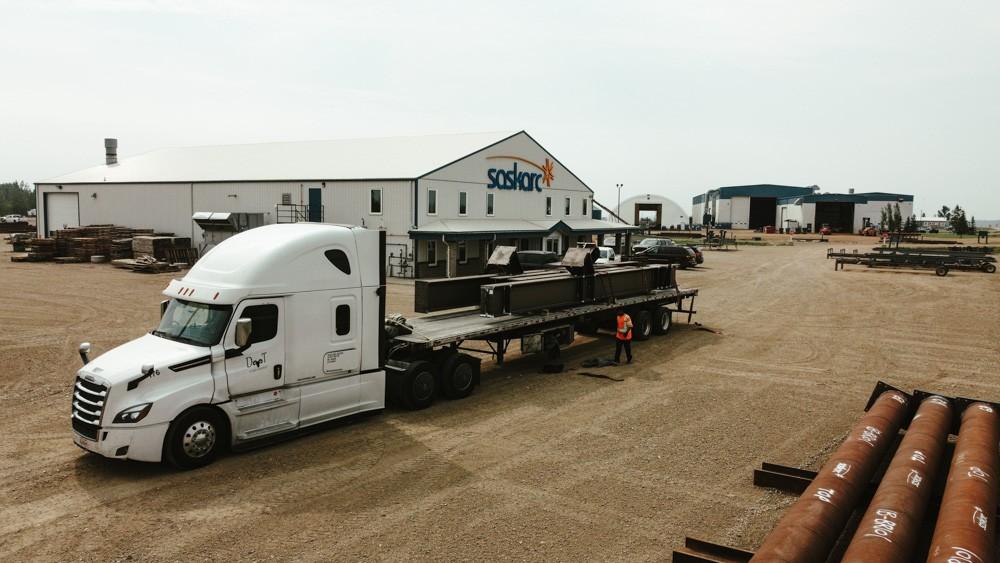
Modular construction is gaining momentum because it directly responds to the challenges facing today’s construction industry. It supports faster installation, more consistent quality, safer work environments, and reduced site congestion.
For steel fabrication and support of excavation projects, modularity is especially powerful when it is considered early. Early involvement allows fabricators, engineers, and construction teams to review the design, identify opportunities for off-site assembly, simplify connections, and plan the delivery sequence before work reaches the field.
When done well, modular construction is more than a fabrication method. It is a project strategy.
As infrastructure projects continue to grow in scale and complexity, the ability to move work off-site, control quality, and deliver ready-to-install systems will only become more important. For contractors working under pressure to reduce timelines, manage risk, and keep projects moving, modular construction offers a clear path forward.
At infraMOD, that is exactly what our name represents: modular steel solutions designed to reduce total installed cost, shorten project schedules, and give our clients more certainty from fabrication through installation.